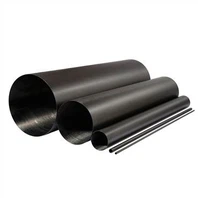
We offer carbon fiber CNC machining services using 3-axis and 4-axis milling CNC machines that achieve an accuracy of up to 0.05 mm and a working field of 200 x 100 cm.
Machining carbon fiber sheets differs from machining metals, and machining carbon fiber sheets is not possible with conventional tools. To cut carbon fiber sheets to size, you achieve the best results by milling the carbon fiber material on a CNC machine. Using a milling tool on the router, you can cut carbon fiber sheets into shapes and drill holes with circular milling.
Drilling, Milling and Cutting of Carbon Fiber Sheets
Due to the need for precise manufacturing of functional carbon fiber sheets and minimizing material waste, using a CNC milling machine and accurately calculating the milling path is a wise choice for machining carbon fiber sheets. Furthermore, you can precisely drill and cut holes in the carbon fiber sheet in the same operation. Milling saves material when the shape to be cut has rounded corners. Compared to using a hand saw, milling yields cleaner cut edges. After cutting, you can even engrave the carbon fiber sheet on the same machine.

Drilling Holes – Circular milling of "drill holes" with counterbores
The high-speed router makes precise drill holes with counterbores, which you could also make with a drill and a countersink. However, it is difficult to drill holes with equal depth and distances. A computer-aided machine can drill the holes faster and more precisely than a manual tool.
Best Practices for CNC Machining Carbon Fiber Sheets
1. Optimize Cutting Parameters
High RPM, Low Feed: Use high spindle speeds but maintain a lower feed rate to minimize delamination.
Climb Milling: Preferred over conventional milling as it reduces edge fraying and improves surface quality.
Shallow Depth of Cut: Prevents excessive heat buildup and avoids tool overloading.
2. Use Proper Tooling
Tool selection is critical for machining carbon fiber efficiently. (We'll cover detailed tooling recommendations in the next section.)
3. Implement Dust Extraction Systems
Carbon dust is conductive and abrasive. CNC machines should use HEPA filtration systems or vacuum extraction to protect both operators and equipment.
4. Fixture Stability
Secure fixturing prevents part vibration, which can lead to edge chipping or misalignment.
5. Cooling & Lubrication
Carbon fiber is usually machined dry. Using conventional coolants is avoided because they can contaminate the resin matrix. Instead, air blast cooling is used to reduce dust and maintain temperature control.
FAQs About CNC Machining Carbon Fiber Sheets
1. Why is carbon fiber difficult to machine?
Because carbon fiber is abrasive and anisotropic, it causes tool wear and requires specialized tooling and cutting strategies.
2. What tools are best for CNC machining carbon fiber?
Diamond-coated (PCD) tools are preferred due to their durability and edge quality. Carbide tools can work for prototypes but wear faster.
3. Can you drill holes in carbon fiber without cracking?
Yes. By using diamond-coated drill bits, peck drilling cycles, and proper fixturing, engineers can drill clean holes without delamination.
4. How do you achieve a smooth surface finish on CNC carbon fiber parts?
Through diamond sanding, epoxy sealing, polishing, and clear coating, we ensure both functional and aesthetic quality.
5. Is CNC machining carbon fiber more expensive than metals?
Yes, primarily due to tool wear, dust management, and specialized processes. However, the performance benefits in strength, weight, and durability often outweigh the costs.