

Pultruded Profiles
Pultrusion
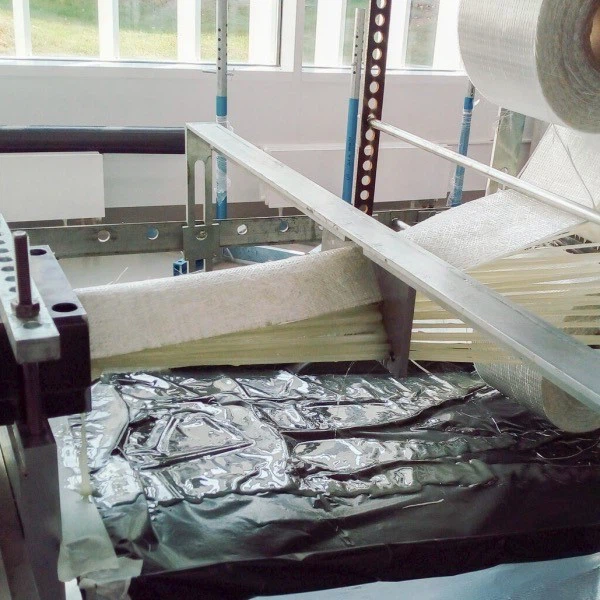
Under the action of traction, the continuous carbon fiber tow, belt, or cloth impregnated with resin glue is formed and cured by extrusion die to continuously produce profiles of unlimited length. Pultrusion is a special process in the composite material forming process. Its advantages are that the production process can be fully automated and controlled, and the production efficiency is high. The fiber mass fraction in pultruded products can be as high as 80%. The dipping is carried out under tension, which can give full play to the role of reinforcing materials. The product has high strength. The longitudinal and transverse strength of the finished product can be adjusted arbitrarily, which can meet the different mechanical properties of the product. Require. This process is suitable for producing profiles with various cross-sectional shapes, such as I-shaped, angle-shaped, groove-shaped, and special-shaped section pipes, and combined section profiles composed of the above-mentioned sections.
-
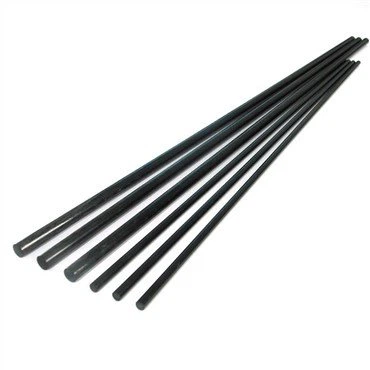
![Carbon Rod]()
Carbon Rod
Pultruded Carbon Fiber Rods and Shapes perform incredibly well in bending and tension applications since all the fibers are oriented along the length of the tube, rod, or shape.Add to Inquiry -
![Pultruded Fiberglass Round Tube]()
Pultruded Fiberglass Round Tube
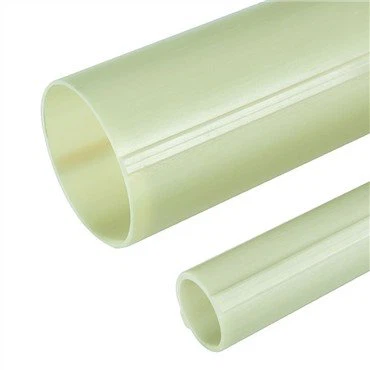
FRP/GRP tube with good insulation, high tensile strength and corrosion resistance, economical.Add to Inquiry -
![Fiberglass Rod]()
Fiberglass Rod
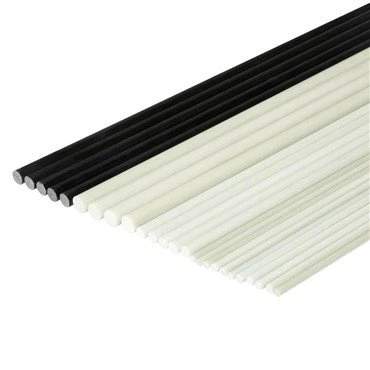
Pultruded Fiberglass Rod is a composite material with unique characteristics making them useful in a wide variety of applications.Add to Inquiry -
![Fiberglass Pipe]()
Fiberglass Pipe
Pultruded fiberglass pipes are widely used in many industries, low cost, lightweight, ease of handling, versatility, strength, durability, and long lifecycleAdd to Inquiry -
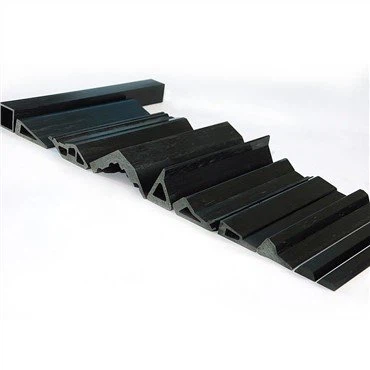
![Fiberglass Profiles]()
Fiberglass Profiles
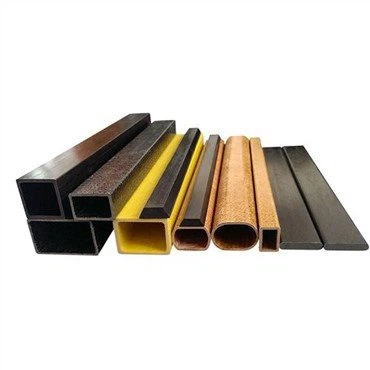
Pultruded Fiberglass Rods, Tubes, Beams and Shapes.Add to Inquiry -
![Carbon Fiber Rod]()
Carbon Fiber Rod
Carbon Fiber Pultruded Rods and Tubes are exceptionally straight and rigid, making them ideal for various applications.Add to Inquiry -
![Carbon Fiber Pultruded Profiles]()
Carbon Fiber Pultruded Profiles
Xinbo Composites Offer Pultruded Carbon Fibre Profiles of high strength, light weight, and high stiffness in varying sizes and shapes.Add to Inquiry -
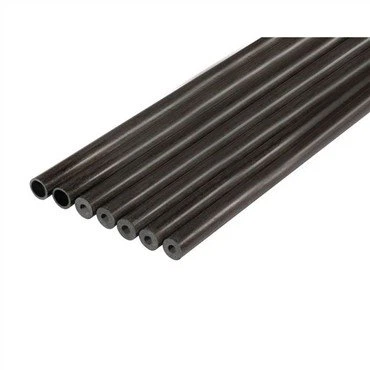
![Pultruded Carbon Fiber Tube]()
Pultruded Carbon Fiber Tube
Xinbo Composites Carbon Fiber Pultruded Tubes are manufactured by pulling continuous carbon fibers combined with a resin matrix through heating Toolings.Add to Inquiry


our services
Xinbo Composites is a professional composites manufacturer, supplying high-quality carbon fiber and fiberglass composite products worldwide Customers
Products Consultant
We are composite experts and help you with carbon fiber or fiberglass project solution
Design and engineering
We offer product design based on your project needs
prototyping
We make the initial prototype for the customer's approval
Mass production
We offer mass production for the best quality and competitive cost
Logistic
We offer courier, air, or sea shipment according to orders
after-sale service
Support warranty and support your products' installation and operation.

Pultrusion Advantages
Sustainable Production Process
The pultrusion speed is 0.5-2m/min. With high production efficiency, which is suitable for mass production and manufacturing of long-sized products;
Lightweight Materials
Carbon fiber and fiberglass materials are easy-to-use, which simplifies the equipment assembly.
Mainly reinforced with untwisted roving, the FRP, and CFRP products enjoy a low raw material cost. In production, choosing different reinforcement materials can give products different transverse and longitudinal strengths thus meeting specific requirements.
The resin content can be precisely controlled, and the high content of fiberglass can fully play the role of enhancing the performance of materials strength.
FRP profiles usually have stable quality and smooth appearance
Maintenance-free, the pultruded FRP and CFRP products do not require maintenance.
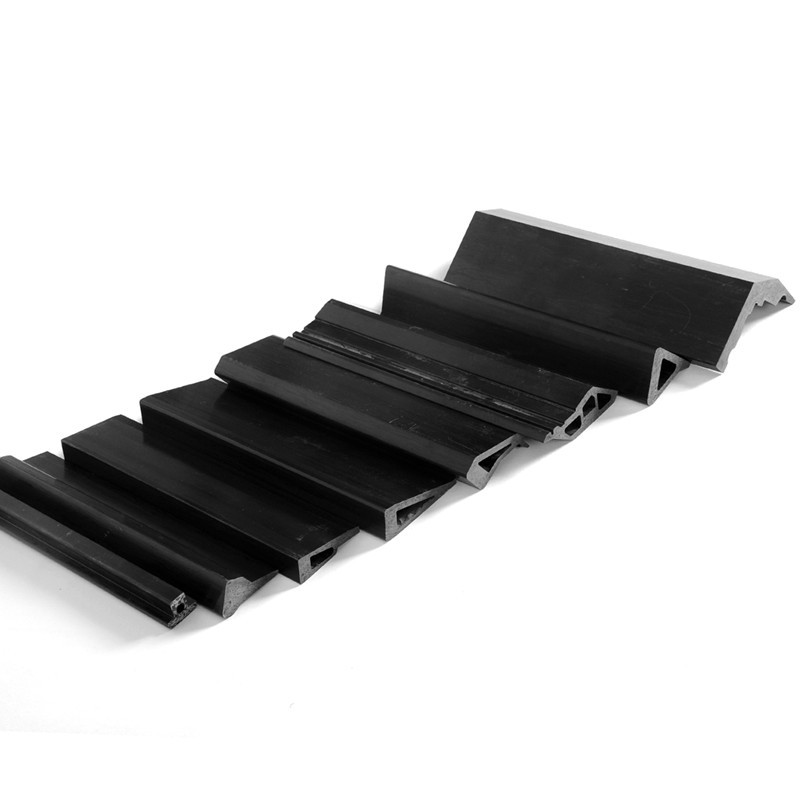
Pultruded profiles are typically produced with a thermoset epoxy or vinyl ester resin in a proprietary low-cost, high-throughput process. Pultruded profiles are production-ready carbon composites for infrastructure applications, deep sea exploration, wind energy, and other applications benefiting from the unique properties of pultruded carbon fiber parts.
Pultruded Carbon Fiber Features
- Low density, lightweight: density is only 1/5 of steel.
- High strength and elastic modulus and excellent impact resistance: tensile strength is 8-10 times of steel, and elasticity can recover to 100%.
- Excellent corrosion resistance, and low long-term creep.
- Excellent fatigue resistance
- Fully automated production, high efficiency.
- 80% Fiber content enables very high strength.
- Less waste, save labor, materials and energy.
- Stable quality and good repeatability. Any length is theoretically available.
Pultruded Fiberglass Profiles
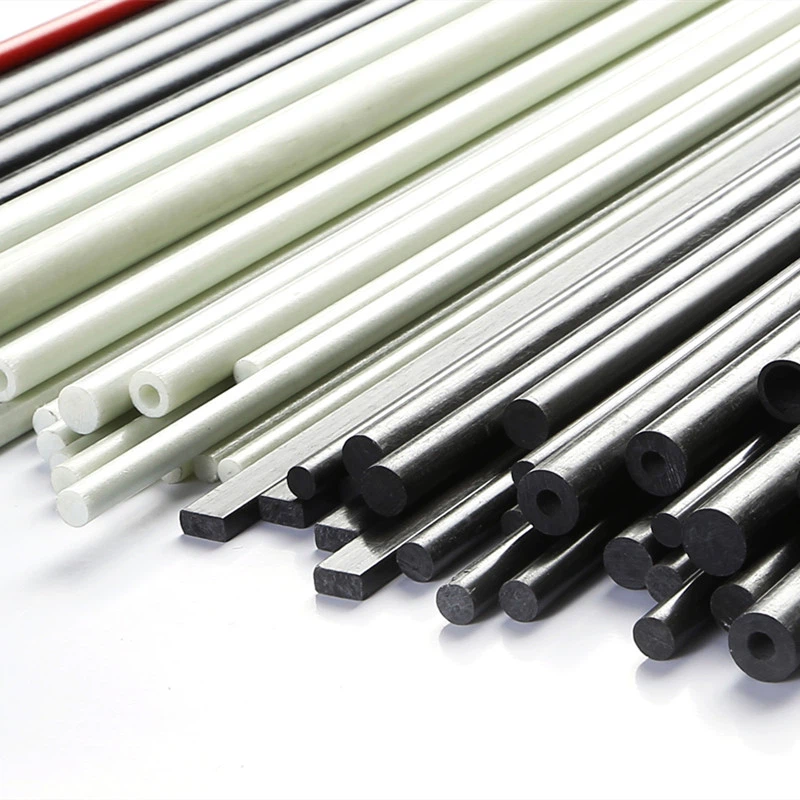
As a manufacturer of fiberglass products, Xinbo supplies various pultruded profiles such as fiberglass tubes, rods, beams, channels, angles, etc.
Fiberglass Profiles Features
- Lightweight- Items that are made via pultrusion are 80% lighter than steel and 30% of the weight of aluminum. Easier to transport and install, ultimately helping to lower costs.
- High-strength- Fiberglass composites have higher strength than metals. Pultruded products are the strongest on the axis direction.
- Corrosion resistant- Fiberglass profiles are naturally impervious to moisture. This means pultruded products will not rot or rust, requiring minimal maintenance.
- Durable- Composites are durable and have a long life span, which means they need to be replaced less often
- Fire-Safety- Fire-resistance additives can be added to pultruded composites, making them safer and compliant with fire safety regulations.
- Electrical insulation- Pultruded materials are also non-conductive and good for current carrying applications
Pultruded carbon Fiber & Fiberglass Applications


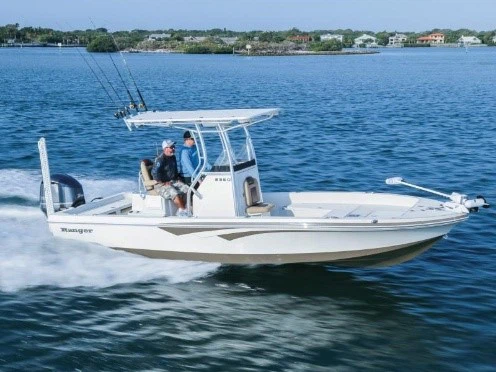
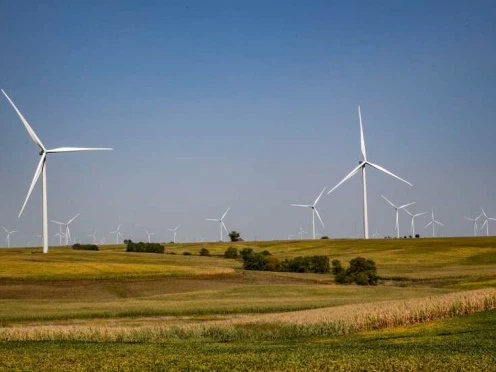


Benefits of Using Fiberglass Profiles
Pultruded fiberglass profiles are superior to many traditional materials such as wood, steel, and aluminum because of their unique properties:
Resistant To Corrosion and Chemicals
FRPs are resistant to a broad range of chemicals and are not affected by oxidation and corrosion. These properties lower the total cost of a project by eliminating the costs associated with painting or galvanizing.
Can Withstand High Temperatures
Pultruded fiberglass profiles are an optimal option for many applications. Fiberglass-reinforced composites are non-conductive, chemical-resistant, and corrosion-resistant. They can be made to have an ultra-high Glass Transition Temperature (Tg) of about 575°F (302°C). As the highest-ranking Tg pultruded material tested, many FRP composites can withstand immense heat and pressure. So, if a fire should burn inside a building, the support structures made out of FRP composite materials should not falter as wood may.
Lightweight With High Tensile Strength
Pultruded fiberglass profiles can be 30% lighter than aluminum and 70% lighter than steel with high strengths. In particular, the pultruded profile provides exceptional dimensional stability and its tensile strength is much higher than that of steel in a pound-to-pound comparison.
Flexible and Impact-Resistant
FRPs do not deform permanently under working load, which is distributed by the glass mat to prevent surface damage.
Cost-efficient
Pultruded fiberglass profiles are easy to handle and easier to transport. For example, they can be cut and shaped using simple tools which reduce the overall cost of any project. Major cost savings stem from easier onsite positioning and a reduction of structural strengthening and foundation design needs.
Highly Durable
Pultruded fiberglass channels have a long lifecycle with low maintenance needs. Over the long term, these channels have low maintenance requirements and costs since they don't deteriorate or rust.
EMI/RFI Transparent
Pultruded channels provide non-magnetic electromagnetic transparency and are therefore an ideal solution for many applications where metal parts can create interference. Pultruded products have a low thermal conductivity of 1/250 (aluminum) and 1/60 (steel). This feature makes the pultruded product effective as a thermal break.
Sustainable
Pultruded products are energy-efficient, require less heat, produce less wastage and causes less pollution. In addition, FRP can have a lifecycle of 75 to 150 years and be recycled or reformed into other plastic-based products. They are an eco-friendly choice for many industries including construction, manufacturing and recreation.
Fiberglass Vs Pultruded Carbon Fiber
You are probably wondering what kind of differences they display when used as a pultrusion material. Here are four of the most significant points of comparison to be aware of:
Because of the relatively thinner diameters of its strands, carbon fiber weighs approximately half as much as fiberglass. However, this difference may not be that significant when comparing equivalent pieces of pultruded fiberglass and pultruded carbon fiber, since the resin adds a significant amount of bulk, generally outweighing the fibers themselves in both cases.
Carbon fiber also exhibits a greater fiber strength than fiberglass. Yet as with the weight difference, this strength difference is not necessarily a significant factor on its own.
For instance, carbon fiber has a fiber strength of 4127, while the type of fiberglass known as E Glass has a fiber strength of 3450 — roughly 16 percent less.
Yet the differences between the two materials come into focus when you consider these factors in tandem. The strength-to-weight ratio expresses how strong each material is relative to its weight.
E Glass has a strength-to-weight of 564, while carbon fiber has a strength-to-weight of 1013 — nearly twice as great.
This high strength relative to weight means that manufacturers need to use far less carbon fiber when pultruding a given product. As a result, pultruded carbon fiber products can often get away with significantly thinner cross-sections.
This is where the real weight reduction comes into play, since less resin will need to be used.
In addition to being stronger than fiberglass, carbon fiber is also stiffer. This extra rigidity can prove highly useful, allowing manufacturers to meet far more precise stiffness needs.
For instance, the silicon tracker modules inside of CERN's Large Hadron Collider required a degree of stiffness that only carbon fiber pultrusions could supply.
However, this increased rigidity does not necessarily mean that carbon fiber makes a better choice for all applications.
Fiberglass with its relatively supple nature is a far better choice for applications that entail high flex patterns. The small flex window of carbon fiber may preclude its use for such applications.
Just as with the relationship between weight and strength, the rigidity of a pultrusion material affects its long-term toughness.
Fiberglass is generally considered tougher than carbon fiber, since its more flexibility nature allows it to withstand stress and physical abuse more easily.
Carbon fiber, despite being stronger, usually has a lower breaking point, making it more susceptible to damage over time.
Compared to materials like steel and aluminum, fiberglass has a relatively small coefficient of thermal expansion — meaning it won't get significantly larger as the result of temperature changes.
That said, if exposed to extreme enough variations — or if tolerances are especially tight — then fiberglass pultrusion may not make a suitable choice.
Carbon fiber has a remarkable property in this regard: it actually has a negative coefficient of thermal expansion. As a result, carbon fiber expands as temperatures go down.
This tendency effectively counterbalances the fact that the resin matrix used to bind together the fibers has a positive coefficient, essentially leading to a near-neutral overall coefficient.
The advantage in terms of cost falls clearly to the side of fiberglass. Producing long carbon fibers is far more a time-consuming and difficult process, which naturally makes carbon fiber more expensive.
Likewise, the broader range of uses for fiberglass — including non-protrusion products — helps to ensure that its price-point remains far more competitive.
Ultimately, both fiberglass and pultruded carbon fiber exhibit unique properties, and neither one is a clear winner for all applications.
Instead, you must carefully consider the needs and parameters of a given product in order to select the material best suited for your needs.
The Manufacturing Process of Pultruded Carbon Fiber Tubes
The process of making pultruded carbon fiber tubes can be divided into several stages:
Preparation of Carbon Fiber Bundle
The first step in the production of pultruded carbon fiber tubes is the preparation of the carbon fiber bundle. The fibers are cut to the desired length, bundled together, and held in place by a resin matrix. The number and orientation of the fibers within the bundle can be varied to achieve the desired properties, such as strength, stiffness, and flexibility.
Resin Impregnation
Once the carbon fiber bundle has been prepared, it is immersed in a resin bath, where it is thoroughly soaked with resin. The resin used in pultrusion is typically epoxy, polyester, or vinyl ester, chosen for its compatibility with the carbon fibers, ability to cure under heat, and ability to resist moisture, UV light, and other environmental factors.
Pulling through the Dies
Next, the resin-impregnated carbon fiber rods bundle is pulled through a series of dies. The dies shape the composite material into the desired cross-section, and the speed at which the material is pulled through the dies determines its final length. The pulling process also compacts the fibers and distributes the resin evenly throughout the bundle, ensuring consistent properties and dimensional stability.
Curing
Once the composite material has been pulled through the dies, it is then cured in a heating process. The temperature, time, and pressure of the curing process can be varied to optimize the properties of the final product. The heat causes the resin to harden, bonding the carbon fibers together and creating a strong, lightweight, and dimensionally stable structure.
Cutting to Length
After the curing process, the pultruded carbon fiber tubes are cut to their final length. This is usually done using a saw or a blade, and the tubes can be cut to exact lengths to meet the specifications of a particular application.
Frequently Asked Questions about Pultruded Profiles
Q: What is an example of a pultrusion?
Q: What are the applications of pultrusion?
Q: What is the pultrusion process?
Fillers and other additives like colourants, fire inhibitors, and UV retardants are frequently mixed into the process to improve the completed product's appearance, corrosion resistance, and long-term performance. As the saturated fibres exit the impregnate, they enter the "pre former," which helps shape the fibre reinforcements by squeezing off excess resin. The resin-impregnated, fibre-reinforced composite is then dragged through hot steel die to cure the thermosetting resin and solidify the polymer into the desired shape.
The hardened FRP is pulled even more towards the cutting blade, where it can be cut to the appropriate length with ease. During the final step of pultrusion, customised urethane pull blocks keep the finished profiles from cracking, bending, or deforming. The finished product is both sturdy and light.
Q: What is the difference between pultrusion and extrusion?
Q: What does the FRP stand for?
It stands for fibreglass reinforced plastic (FRP). FRP consists firstly of fibres, namely glass fibres, and secondly of a plastic matrix surrounding the glass fibres. This matrix consists of either thermosets or thermoplastic material.
Q: What is pultruded carbon fiber?
The carbon fibers used in the pultrusion process are usually unidirectional, meaning the fibers run the length of the part, making this material particularly suitable for applications involving bending and tensile forces. However, pultruded carbon fiber components are not recommended for applications requiring torsional strength or withstanding lateral loads, as the fibers are aligned in one direction, which could lead to splitting under torsional loads.
Pultruded carbon fiber components can be easily machined using tools such as band saws, jigsaws, spiral saws, end mills. Additionally, due to their epoxy matrix, they are readily bonded with epoxy resins. The high fiber volume fraction achieved through pultrusion results in a high strength-to-weight ratio, making it an ideal process for producing structural components.
Q: What is the pultruded carbon fibre tube?
The pultrusion process is better suited to smaller diameter tubes and our range extends from the incredibly small 0.5mm OD tube up to a 12mm OD tube. For tube diameters where you have the choice between a pultruded or roll wrapped tube, pultrusion is best for applications where you need the maximum possible stiffness down the length of the tube and you are not too worried about needing resistance to crush, burst or twist.
All our pultruded carbon fibre tubes are manufactured using high strength carbon fibre with an epoxy resin matrix for maximum performance, durability and accuracy. They are suitable for a wide range of applications including UAVs, quad-copters, aero-modelling, automation, leisure equipment, motor-sport and much more.
Q: What is the advantage of pultrusion process?
Q: What are GRP and FRP?
Q: What is the difference between GRP & carbon?
Q: Do I need a rod or a tube?
Q: What colours can I have?
White or black GRP products are generally kept in stock (up to 10mm diameter for rods and up to 12.7mm for tubes in both colours). The larger sizes of both products are available in white. Other colours can be produced in GRP, with a minimum order value per product of £500 excluding VAT.
Carbon:
Is always black.
Q: How do I cut it?
Q: What are the minimum batches to request production?
Q: Can fiberglass profiles be glued?
Q: What technologies are available for assembling fiberglass profiles?
Q: Can fiberglass profiles be processed?
Q: Can fiberglass profiles be labeled or marked?
Q: Can profiles be fiberglass coated?
Q: What colors can fiberglass profiles be made in?
Q: What types of resin can be used in pultrusion?
Q: What are the main components of fiberglass profiles?
Q: What is the minimum thickness for pultruded profiles?
Q: Is it possible to produce fiberglass profiles to a specific design?
Q: What kinds of environments are fiberglass profiles resistant to?
Q: What are the tolerances for pultruded profiles?
As one of the most professional pultruded profiles manufacturers in China, we're featured by quality products and good service. Please rest assured to buy or customized pultruded profiles at competitive price from our factory.
Buy carbon fiber rod tube, GRP Profiles, long fiberglass rods