

Round Tube
XINBO: Your Professional Round Tube Manufacturer!
15+ Years of Production Experience
Xinbo Composites Co., Ltd specializes in R&D, design, technical consulting, manufacturing, and sales of carbon fiber composite products. With strong technical strength and 15+ years of experience in manufacturing, Xinbo Composites is at the leading level in the research and development of high-end composite products.
Customization Services
We are an innovative, professional composite products manufacturer, specializing in the design, analysis, prototyping, and manufacture of tubing, parts, telescoping systems, and products made from carbon fiber composites.
Innovation Skills
While customizing innovative solutions for customers, Xinbo Composites insists on developing and launching new products to adapt to ever-changing demands.
Global Footprint
Our company is guided by customer demand and ensures to provide comprehensive and timely services for customers. High-quality products and professional service make Xinbo Composites win the recognition of customers all over the world, and its products are exported to America, Europe, Japan, Australia, and Africa.
-
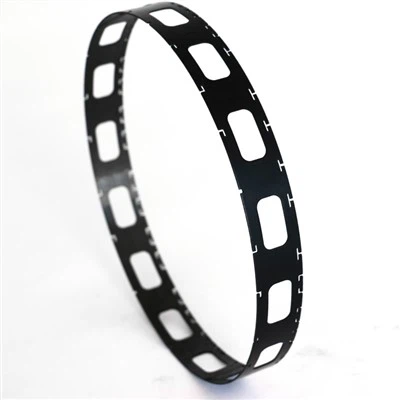
![CNC Machining Carbon Fiber Tube]()
CNC Machining Carbon Fiber Tube
Xinbo Composites provides CNC machining carbon fiber tubes, such as polishing, cutting, drilling, grinding, milling holes, slotting. Carbon Fiber Tube is an excellent choice for many applications andAdd to Inquiry -
![Carbon Fiber Tube]()
Carbon Fiber Tube
Carbon fiber Tubes are available in different diameters 5-500mm, various lengths up to 6000mm, and optimal wall thicknesses.Add to Inquiry -
![Large Diameter Carbon Fiber Tube]()
Large Diameter Carbon Fiber Tube
50mm 80mm 100mm 200mm 300mm 500mm Large Diameters Carbon Fiber Tubes Customized Manufacturing Factory.Add to Inquiry -
![Filament Wound Carbon Fiber Tube]()
Filament Wound Carbon Fiber Tube
Xinbo Composites offers high quality filament winding carbon fiber tubes that are suitable for torsional strength applicationsAdd to Inquiry -
![Carbon Tube Round Tubing]()
Carbon Tube Round Tubing
10mm 20mm 30mm 40mm 50mm Carbon Fiber Tubes are available, and lengths up to 6000mm.Add to Inquiry -
![Carbon Fiber Tubing]()
Carbon Fiber Tubing
Supply 2m 3m Braided Carbon Fiber Tubing Glossy or Polished SurfaceAdd to Inquiry -
![Carbon Fiber Pole]()
Carbon Fiber Pole
High performance Carbon Fiber Poles are made of high grade Toray carbon fiber prepregs, providing excellent mechanical propertiesAdd to Inquiry -
![Carbon Fiber Pipe]()
Carbon Fiber Pipe
Supply Carbon fiber pipes with various diameters from 5mm to 500mm, and lengths up to 4000mm, we also provide post-processing services such as drilling and CNC milling, coating, etc.Add to Inquiry -
![Roll Wrapped Carbon Fiber Tube]()
Roll Wrapped Carbon Fiber Tube
Carbon fiber tubes are made by roll wrapped process, constructed using multiple carbon fiber prepregs. Most suitable for high torsional and stiffness applications.Add to Inquiry -
![Telescoping Carbon Fiber Tube]()
Telescoping Carbon Fiber Tube
Supply Carbon Fiber Telescopic Pole For Customized Telescoping Pole SystemAdd to Inquiry -
![Carbon Fiber Shaft]()
Carbon Fiber Shaft
Anti-Pressure and lightweight carbon fiber shafts with high strength for advanced performance.Add to Inquiry -
![Carbon Fiber Round Tube]()
Carbon Fiber Round Tube
Round Carbon fiber tubes are perfect in situations where you are looking for very stiff, strong and lightweight benefits.Add to Inquiry


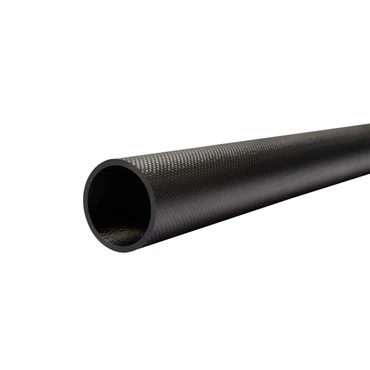


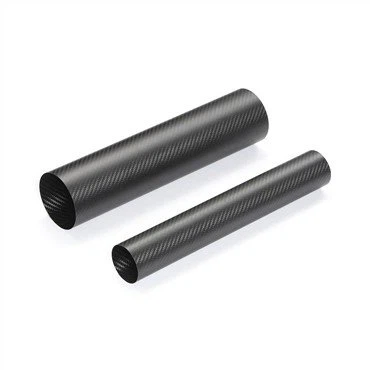

A carbon fiber round tube is a cylindrical structure made from carbon fiber composite material. Carbon fiber tubes are constructed using layers of prepregs (pre-impregnated carbon fiber fabric) that are cured under heat and pressure. These tubes are engineered for exceptional strength, stiffness, and lightweight performance. Carbon fiber round tubes find applications in various industries and structural fabrications.
Carbon Fiber Tube Characteristics
Carbon fiber tubes are typically produced in circular, square, or rectangular shapes, but they can be fabricated into almost any shape, including oval or elliptical, octagonal, hexagonal, or custom shapes. Roll-wrapped prepreg carbon fiber tubes consists of multiple wraps of twill and/or unidirectional carbon fiber fabric. Roll-wrapped tubes work well for applications that need high bending stiffness combined with low weight.
Alternatively, braided carbon fiber tubes are made up of a combination of carbon fiber braid and unidirectional carbon fiber fabric. Braided tubes offer excellent torsional characteristics and crush strength, and they are well-suited for high-torque applications. Large diameter carbon fiber tubes are typically constructed using rolled bi-directional woven carbon fiber. By combining the right fiber, fiber orientation, and fabrication process, carbon fiber tubes can be created with the proper characteristics for any application.
Other characteristics that can be varied by application include:
Materials—Tubes can be fabricated from standard, intermediate, high, or ultra-high modulus carbon fiber.
Diameter—Carbon fiber tubes can be made from very small to large diameters. Custom ID and OD specifications can be met for particular needs. They can be made in fractional and metric sizes.
Tapering—Carbon fiber tubes can be tapered for progressive stiffness along the length.
Wall thickness—Prepreg carbon fiber tubes can be fabricated to virtually any wall thickness by combining layers of various prepreg thicknesses.
Length—Roll-wrapped carbon fiber tubes come in several standard lengths or can be built to a custom length. If a requested tube length is longer than recommended, multiple tubes can be joined with internal splices to create a longer tube.
Exterior and sometimes interior finish—Prepreg carbon fiber tubes typically have a cello-wrapped gloss finish, but a smooth, sanded finish is available, too. Braided carbon fiber tubes typically come with a wet-looking, shiny finish. They can also be cello-wrapped for a glossier finish, or a peel-ply texture can be added for better bonding. Large diameter carbon fiber tubes are textured on both the interior and exterior to allow for bonding or painting of both surfaces.
Exterior materials—Using prepreg carbon fiber tubes allows for the option of selecting different exterior layers. In some cases, this can also allow the customer to select the exterior color.
Types of Carbon Fiber Tubes
Standard Modulus Carbon Fiber Tubing (SM)
This is the most common grade of carbon fiber used for our carbon fiber tubes. Standard modulus offers excellent strength and stiffness. It is 1.5X stiffer than aluminum and is the most economical grade.
Intermediate Modulus Carbon Fiber Tubing (IM)
This grade of tubing offers enhanced stiffness over standard modulus carbon fiber tubing with the same or better strength. Intermediate modulus is approximately two times stiffer than aluminum tubing.
High Modulus Carbon Fiber Tubing (HM)
At three times stiffer than aluminum (or equivalent to steel stiffness), this grade of tubing has very similar strength to standard modulus carbon fiber tubing. It is an excellent choice for demanding, weight sensitive applications.
Ultra-High Modulus Carbon Fiber Tubing (UHM)
Incredible stiffness at four-five times that of aluminum or 1.5 times that of steel. Ultra-high modulus has lower strength and is not recommended for high stress applications.
Applications of Carbon Fiber Tubes
Carbon fiber tubes combine the properties of aluminum and steel tubes. It has both the strength properties of steel and the lightweight properties of aluminum. This feature allows carbon fiber tubes to gradually replace aluminum tubes and to be used in aerospace, racing and leisure sports fields that require light weight and strength. Let's talk about what fields carbon fiber tubes are usually used in.
Carbon fiber tubes widely used in the below field:
Drone/UVA/Robotics arm.
Carbon Tube Grip Fishing Rod
Carbon fiber paddle and other water sports products
Carbon fiber telescopic poles.
Carbon fiber bicycle Frame
Spear Gun Carbon Fiber Tube.
Carbon Fiber Automobile Intake Air Pipe. (Some customers choose carbon fiber tubes instead of metal tubes as they prefer carbon fiber appearance. But remember to confirm with the seller whether the tube is resistant to high temperature when you buy it)
Carbon Fiber Tapered Conical Tube Pole Billiards Shaft. (Normally need to customize a mold to produce)
Snooker cue golf shaft tube and other sports products
Advantages of Carbon Fiber Tube
Light Weight
Lightweight is a very important advantage of carbon fiber tubes. The density of carbon fiber itself is relatively low. The density of carbon fiber tube produced and processed is about 1.8g/cm3. Compared with the common steel tube, it is only a quarter of its weight. This makes the advantage of carbon fiber tubes particularly obvious in the application of many weight reduction products, which requires a very strong advantage.
The Tensile Strength Is High
The tensile strength of carbon fiber tubes is also very high. In the production of carbon fiber tubes, due to different processes, the tensile strength of carbon fiber tubes produced is different, but no matter how low, there will be 40 million psi, usually about 100 million psi. The tensile strength of steel tubes can only reach 29 million psi, which also makes the tensile strength of carbon fiber tubes reach more than three times that of steel.
Shear Strength
Shear strength refers to the strength performance of the transverse force received. The shear strength can be changed by different layers of carbon fiber pipes. Generally, the shear strength of carbon fiber pipes can reach 8gpa, which is also much higher than that of traditional steel pipes.
Convenient Construction
It occupies less space, does not need large machines and tools, does not need wet operation, does not need hot work, does not need on-site fixed facilities, and has high construction efficiency.
High Stability
Compared with metal pipes, carbon fiber pipes have better corrosion resistance and strong aging resistance, which makes the performance stability of pipes very high and their service life longer, including better stability at high and low temperatures, and also have very good performance in some bad environments.
Customizing Composite Round Tube Aesthetics and Surface Finishes
The surface aesthetic design is considered when developing new composite products. Often the surface aesthetic will be part of the mechanical requirements solution, where the entire construction of the composite is determined.
Veil
A non-mechanical, thin, lightweight layer of fiber, typically fiberglass, which produces a highly resin-rich surface. This is the standard surface finish for composites manufactured by us, smooth to the touch and brightly pigmented due to the resin-rich surface.
Mat
Chopped strand or continuous strand mats – a non-woven mat made of strands of fibers with a random orientation. Mats add to the structural design of the composite and also provide a resin-rich surface for strong pigmentation. The fibers in the mat add a tactile surface feel to the finished composite.
Fabrics
With different weave patterns available, reinforcing fabrics contribute to the mechanical structure of the composite while the weave pattern contributes to the aesthetic. Weave patterns (such as a twill) can have fibers oriented to ± 0/90 degrees or ±45 degrees, relative to the tube axial direction.
Cross-Windings
Perhaps the most highly-aesthetic example, cross-windings are produced using a variety of reinforcing fibers wrapped around the tube, crossing over each other to produce unique patterns. The cross-wound fibers provide transverse stiffness and strength to the composite
Functional Coatings
A layer of thermoplastic can be extruded on top of the tube surface during the pultrusion/pull-winding process. The coating can provide many functions, from a high-friction surface to an alternative to resin pigmentation or even additional UV-protection.
Post-Manufacturing Options
These consist of traditional painting of the composite or more advanced surface treatments, such as grinding the composite surface to produce a matte finish.
How is Carbon Fiber Made?
To produce carbon fiber, an organic polymer precursor is needed. This raw material is processed with heat and chemical agents to convert it to carbon fiber.
The first high-performance carbon fiber materials were made from a rayon precursor.
Currently, approx 90% of carbon fiber is made from polyacrylonitrile, while the other 10% or so is made from rayon or petroleum pitch.
The carbon fiber manufacturing process begins with carbonization. To achieve high-quality carbon fiber, the precursor polymer needs to contain a high percentage of carbon atoms. The majority of the non-carbon atoms within the structure will be removed in the process.
First, the precursor is pulled into long fibers. These fibers are then heated to very high temperatures in an anaerobic gas mixture (without the presence of oxygen) to ensure the material doesn’t burn. The heat energizes the atomic structure of the fibers and drives off most of the non-carbon atoms from the material.
Following carbonization, the surface of the carbon fibers must be treated to improve bondability with epoxies or other resins. Careful oxidation of the surface of the carbon fibers improves chemical bonding properties, while simultaneous roughening of the surface provides improved mechanical bonding.
This oxidation can be accomplished in a number of different ways. The carbon fiber can be exposed to various gases such as carbon dioxide or ozone, or liquids such as nitric acid, or even processed electrolytically.
Prior to weaving, the carbon fibers must be sized, or coated, with a polymer to protect them during the weaving process. The sizing is selected for compatibility with the laminating resin to be used. The fibers are then wound onto bobbins, spun, and processed into various weaves and other formats
How To Care For Your Carbon Fibre Products?
In order to get the maximum life from your carbon fibre composite tubing we recommend the following care and precautions:
Do not allow the tubing to become excessively hot. High performance epoxy resins, together with oven post curing, are employed in our tubes, however at temperatures above approximately 75oC the epoxy can soften which dramatically reduces strength or otherwise can cause the tube to bow or warp. Note that black objects are the best absorbers of IR radiation (heat) and we have recorded a surface temperature of 65oC from a tube lying flat on the ground in the summer sun on a windless day.
Epoxy resins are UV light degraded. Excessive UV light has the effect of turning the exposed epoxy resin into a chalky layer which can then easily fall off, resulting in exposure of the fibres to the weather. Moisture can then enter the exposed fibres and cause wicking to the inside of the laminate which further reduces the laminate’s strength and integrity.
3)Whilst these two effects can be either avoided, or are relatively long term (many dinghy sailors have chosen to leave their masts naturally black), we recommend painting the composite tubing with a UV resistant polyurethane based paint or clear coating. Correct application of paint will effectively eliminate degradation due to these effects and allow the other long life properties (ie. excellent corrosion and fatigue resistance) of composite tubing to be realised.
Carbon fibres are good conductors of electricity. In a similar way that aluminium masts need lighting strike protection so do carbon fibre composite masts.
Because carbon fibres are good conductors there is potential for corrosion with dissimilar metals. The major metal to avoid here is aluminium. which is anodic to carbon, and hence corrodes in time. The use of plastic fittings, SS fittings or aluminium fittings with isolation barriers is good practise. Some SS metals may still corrode but generally higher grades of SS possess sufficient surface passivity protection to avoid corrosion. All said and done, many people still use aluminium fittings in direct contact with carbon fibre composites (ie spinnaker pole end fittings) and the corrosion effect is no greater than the general aging that occurs to the fitting due to wear and tear.
Carbon fibre composites are very directional in regard to mechanical properties. This is generally seen as an advantage because fibre direction can be optimised by aligning in the same direction as load paths. Most composite tubing used for masts, booms, poles, etc. are optimised for axial strength and stiffness. The strength and stiffness in the other ‘hoop’ direction is correspondingly much less. As a result, carbon fibre composite spars are produced with thicker walls than aluminium spars, however they can still be weaker in this hoop direction. Care should be taken to avoid excessive hoop loads for tubes designed for axial loads. An example of this kind of load is dropping a spinnaker pole onto the forestay whilst under spinnaker load. Localised sleeving of the pole (ie SS inner tube, Carbon inner tube) is good practise to strengthen the pole at this point.
Carbon fibre composites do not yield (plastically deform) prior to failure. Often little warning is given that the tube is likely to fail. Care should be taken in regard to heavily loaded tubes to avoid personal and product injury.
Our Factory
Frequently Asked Questions about Round Tube
Q: What is so great about carbon fiber tubing?
Q: What materials are used to build your tubes?
Q: How much heat will these tubes withstand?
Q: Can carbon fiber tubing be bent to shape like metal?
Q: What are those funny lines on the tubes?
Q: Can I drill carbon fiber tubing?
1)Bit: Jobbers carbide drill bit for composites (brad-point)
2)Spindle Speed: faster the better -Reinforce backside to prevent blowout.
3)Can be done with tape, dowel, plug, or clamped to a sacrificial material.
Q: What is carbon fiber made from?
Q: Is carbon fiber fireproof?
Q: Is carbon fiber strong?
Though carbon fiber is exceptionally strong, it is not indestructible. Also, remember that not all carbon fibers are created equally. When considering how strong carbon fiber is, you must take into consideration how it was manufactured. Not all carbon fiber is made to be as strong as others and how strong your carbon fiber will be will depend on the unique needs of your project and your specifications.
Q: Is carbon fiber waterproof?
Q: How light is carbon fiber?
Q: What can carbon fiber be used for?
You might be familiar with carbon fiber materials without even knowing it. The interior and exterior components of vehicles often utilize carbon fiber for its durability and strength while being aerodynamic.
Q: What is carbon fiber tubing?
Q: What is a 3K carbon fiber tube?
Q: Which is better carbon fiber tube or steel tube?
Q: How carbon fiber is made?
Gases, liquids, and other materials used in the manufacturing process create certain effects, qualities, and grades of carbon fiber. The highest-grade carbon fiber with the best modulus properties is used in demanding applications, such as in the aerospace industry.
Carbon fiber manufacturers differ from one another in terms of the combinations of raw materials they use. They usually treat their specific formulations as trade secrets.
Q: Is carbon fiber stronger than steel?
As one of the most professional round tube manufacturers in China, we're featured by quality products and good service. Please rest assured to buy or customized round tube at competitive price from our factory.
Customized Filament Winding Tube, cfrp tube, Buy carbon fiber tube frame