

Composite Tube
Xinbo Composites manufactures a wide range of high-end composite tubes, from standard round tube dimensions using fiberglass, carbon fiber, or a hybrid mix of carbon kevlar or carbon composite to completely customized shaped tubes to meet your specific requirements. Whether you are looking for a glass fiber tube, a carbon fiber tube or a hybrid composite tube, we’ve fit your needs.
Carbon fiber or fiberglass, composites offer common benefits of high strength, lightness, stiffness, resilience and chemical and corrosion resistance, making them ideal for many performance-based applications. We offer customized solutions for round, oval, square, rectangle, hexagonal, octagonal, or tapered, telescoping tubes.
-
![Carbon Fiber Octagonal Tube]()
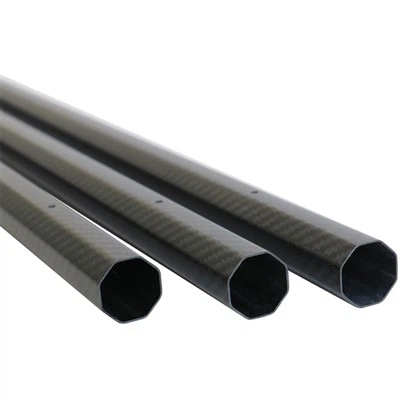
Carbon Fiber Octagonal Tube
Xinbo Composites manufactures carbon fiber tubes that can be divided into carbon fiber round tubes, square tubes, hexagonal tubes, bent tubes, etc. Different carbon fiber tubes have differentAdd to Inquiry -
![CNC Machining Carbon Fiber Tube]()
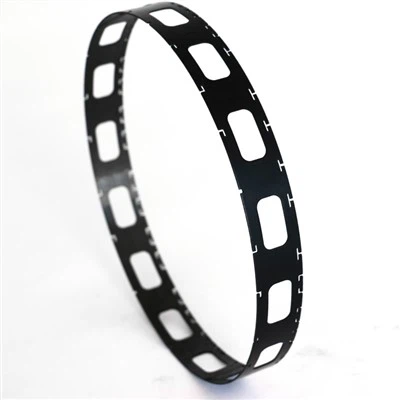
CNC Machining Carbon Fiber Tube
Xinbo Composites provides CNC machining carbon fiber tubes, such as polishing, cutting, drilling, grinding, milling holes, slotting. Carbon Fiber Tube is an excellent choice for many applications andAdd to Inquiry -
![Carbon Fiber Drone Tube]()
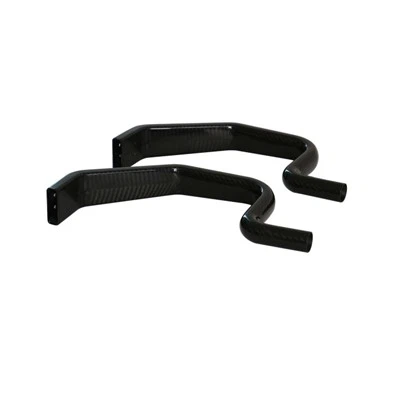
Carbon Fiber Drone Tube
Carbon fiber drone tubes are a high-performance structural component designed specifically for drones.Add to Inquiry -
![Carbon Fiber Square Tube]()
Carbon Fiber Square Tube
Square carbon fiber tube is made of carbon fiber weave and unidirectional fabrics, ideal for building lightweight Robitc frames and structures.Add to Inquiry -
![Carbon Fiber Tube]()
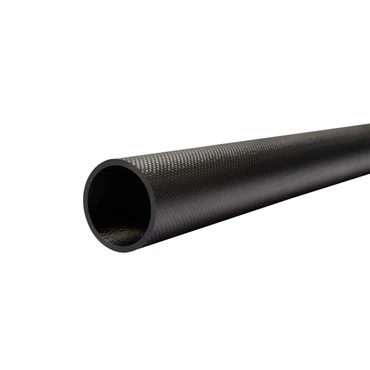
Carbon Fiber Tube
Carbon fiber Tubes are available in different diameters 5-500mm, various lengths up to 6000mm, and optimal wall thicknesses.Add to Inquiry -
![Large Diameter Carbon Fiber Tube]()
Large Diameter Carbon Fiber Tube
50mm 80mm 100mm 200mm 300mm 500mm Large Diameters Carbon Fiber Tubes Customized Manufacturing Factory.Add to Inquiry -
![Filament Wound Carbon Fiber Tube]()
Filament Wound Carbon Fiber Tube
Xinbo Composites offers high quality filament winding carbon fiber tubes that are suitable for torsional strength applicationsAdd to Inquiry -
![Carbon Tube Round Tubing]()
Carbon Tube Round Tubing
10mm 20mm 30mm 40mm 50mm Carbon Fiber Tubes are available, and lengths up to 6000mm.Add to Inquiry -
![Carbon Fiber Tubing]()
Carbon Fiber Tubing
Supply 2m 3m Braided Carbon Fiber Tubing Glossy or Polished SurfaceAdd to Inquiry -
![Carbon Fiber Pole]()
Carbon Fiber Pole
High performance Carbon Fiber Poles are made of high grade Toray carbon fiber prepregs, providing excellent mechanical propertiesAdd to Inquiry -
![Carbon Fiber Pipe]()
Carbon Fiber Pipe
Supply Carbon fiber pipes with various diameters from 5mm to 500mm, and lengths up to 4000mm, we also provide post-processing services such as drilling and CNC milling, coating, etc.Add to Inquiry -
![Roll Wrapped Carbon Fiber Tube]()
Roll Wrapped Carbon Fiber Tube
Carbon fiber tubes are made by roll wrapped process, constructed using multiple carbon fiber prepregs. Most suitable for high torsional and stiffness applications.Add to Inquiry


why choose us
Xinbo Composites Specialised in carbon fiber tube production more than 15 years
Large scale Factory
4000 Square meters plant and advanced equipment
ISO9001 certification
Strict quality control and a long warranty
additional Services
With polishing, CNC machining, coating and assembling
After-sale Service
We offer 24hours support services for sales orders
carbon Fiber Tube advantages
Lightweight: Compared with other pipes, the density of carbon fiber materials is extremely low, which makes the weight of the carbon fiber pipe itself extremely low, making it lighter to use
Good mechanical properties: Carbon fiber has excellent mechanical properties. For example, the density of T300 carbon fiber tube is only about 1.6g/cm, and the tensile strength can reach 3600Pa.
Good chemical properties: carbon fiber pipes have very good chemical stability, carbon fiber pipes still maintain good stability in the environment of acid, alkali and salt corrosion, and have very high corrosion resistance.
Good thermal stability: Carbon fiber can still have good stability despite temperature differences. The linear expansion coefficient of thermal expansion and contraction is also relatively low and will not creep easily, which can better ensure the accuracy of the tube.
Good fatigue resistance: Carbon fiber has the advantage of very good fatigue resistance. It can be used for a long time and is not prone to fatigue. This makes the entire carbon fiber tube product deformed very little and is more convenient to use.
Shock absorption: In carbon fiber products, because each carbon fiber is evenly distributed inside of CFRP product, this results in better overall structural stability of the carbon fiber, so that the vibration can be well absorbed under pressure.
Carbon Fiber Tubing Manufacturing Processes
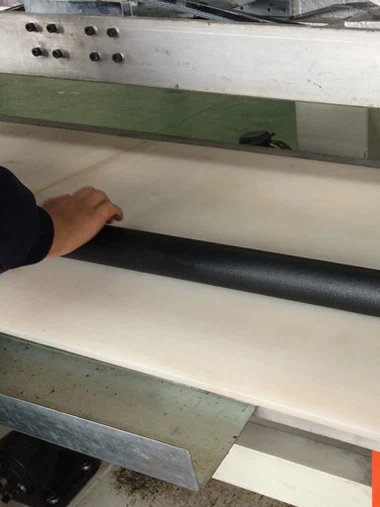
Roll Wrapping
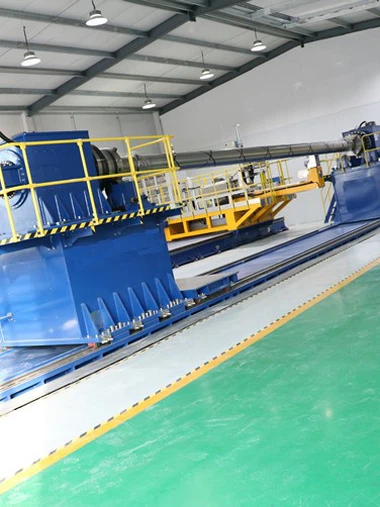
Filament Winding
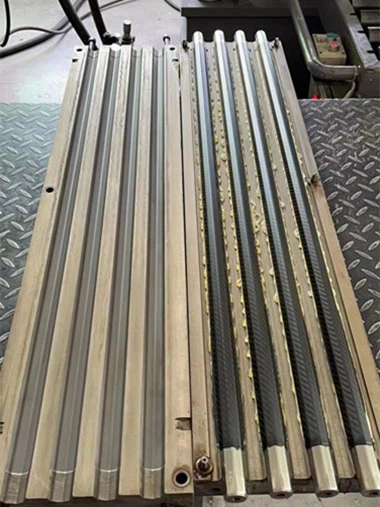
Mold Pressing
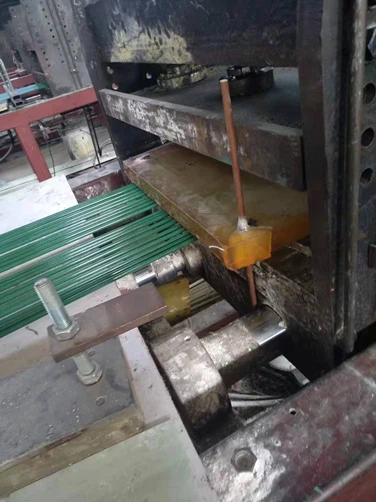
Pultrusion
Roll-Wrapping Process
Roll wrapping is typically done with a prepreg product to ensure consistency. A prepreg is a composite product consisting of fabric or fiber already impregnated with the epoxy resin necessary to hold everything together.
The prepreg material is cut into layers of different fiber orientation. Those layers are then rolled onto a cylindrical rod known as a mandrel. The mandrel and prepreg are then wrapped in a plastic film to contain the epoxy resin and compress the layers during curing. Once curing is complete, the mandrel is removed from the center of the finished tube.
Roll wrapping results in maximum consistency across both carbon fiber and fiberglass tubing. The process also affords more customization in terms of both fiber/mandrel configuration and production quantities.
Filament Winding Process
The filament winding process involves two primary components. A stationary steel mandrel rotates, while a carriage arm travels horizontally up and down the length of the mandrel. The traveling arm includes a winding eye, which groups the rovings—typically of carbon, fiberglass, or a mixture of the two—and dispenses them to the mandrel. As the mandrel turns, the rovings wrap around it to form a composite layer over the mandrel’s surface. The precise orientation of the composite matrix is determined by the rate of travel of the carriage and by the rotational speed of the mandrel, both of which are automated. Before encountering the mandrel, the fibers are impregnated in a resin, which later solidifies with the fiber to create the final composite tubes. Resin type, fiber type, wind thickness and wind angle are all engineered for product optimization.
Mold Pressing
The carbon fiber prepreg is placed between the upper and lower molds, and the mold is placed on the hydroforming table. After a certain period of high temperature and high pressure to solidify the resin, the carbon fiber product is removed. This molding technology has the advantages of high efficiency, good product quality, high dimensional accuracy, and less environmental impact, and is suitable for the molding of mass and high-strength composite parts. Mold manufacturing is complex, the investment is high, and the size of the parts is limited by the size of the press.
Pultrusion Process
Under the action of traction, the continuous carbon fiber tow, belt, or cloth impregnated with resin glue is formed and cured by extrusion die to continuously produce profiles of unlimited length. Pultrusion is a special process in the composite material forming process. Its advantages are that the production process can be fully automated and controlled, and the production efficiency is high. The fiber mass fraction in pultruded products can be as high as 80%. The dipping is carried out under tension, which can give full play to the role of reinforcing materials. The product has high strength. The longitudinal and transverse strength of the finished product can be adjusted arbitrarily, which can meet the different mechanical properties of the product. Require. This process is suitable for producing profiles with various cross-sectional shapes, such as I-shaped, angle-shaped, groove-shaped, and special-shaped section pipes, and combined section profiles composed of the above-mentioned sections.
Carbon Fiber Tubes Surface Finishes
Designed to make your composites corrosion resistant, UV protection and aesthetically pleasing

Natural

Polished

Clearcoat

Painted
Be used in a wide range of industries.

Automation

Marine

UAV & Drones

Agriculture Machines

Print & Weave Machines

Sporting Goods
Common Types of Composite Materials
Fibre-reinforced Polymers (FRPs)
This is a material made with a polymer matrix which is reinforced with fibres; mainly glass, carbon fibre or aramid fibres. Fibre-reinforced polymers are commonly used in aerospace, automotive, marine and construction. This is largely because they are strong, durable and long lasting, made to exacting specifications and are usually very low weight and are therefore energy efficient.
Synthetic Resin Bonded Fabrics (SRBF)
Materials in this category are found in the composite bearings manufacturing industry, again using a polymer matrix often filled with solid lubricant additives and reinforced with fibres such as Polyester, Nomex or in some instances natural fibres such as Cotton or Jute. Tufcot SRBF Composite Bushes, Bearings, Wear pads and other wear components are used in a vast number of industries and equipment around the world, it’s often used to replace conventional bearings to reduce maintenance, or in environments where conventional bearings would not be suitable or in designing equipment where the materials properties can be exploited to their maximum or unique capabilities.
Glass-reinforced Polymers (GRPs)
Glass reinforced polymers are also known as fibreglass. These are plastics which are reinforced with glass fibre. There are many benefits to using GRPs for suitable applications such as the high corrosion resistance, strength & high impact resistance, low weight, non-conductive properties, ease of fabrication and low maintenance. Glass-reinforced polymers are used in numerous applications, particularly in industrial gaskets, as insulation and to protect machinery and ensure safety. Typical applications include chemical industry, docks and marinas, manufacturing, food and beverage industries, automotive, marine, aerospace and many more.
Shape Memory Polymers (SMPs)
Shape memory polymers are able to return to their original state even after becoming misshapen or deformed. Shape memory polymers are commonly used in industrial applications such as window frame seals, sporting equipment, engines and much more. They are also used in phototonics and fibre optics which is leading into the medical sector in which shape memory polymers are in their infancy with huge potential.
High Strain Composites
High Strain composites are designed to be able to withstand extreme weights and heavy loads. There is an element of flexibility within the composite as it often changes shape with the weight of the load and has a stable shape when not weight bearing. High strain composites are commonly used in aerospace and defence due to the high reliability, stiffness, stability and cost effectiveness.
Metal Matrix Composites (MMCs)
Metal Matrix composites are composites of two or more materials; one is always a metal and the other can be another metal or other material for low density and high strength. Metal Matrix composites are commonly used in Space Shuttle components, commercial airliners, electronic substrates, bicycles, automobiles, golf clubs, a variety of other high-end sports equipment and other applications.
What is Carbon Fiber?
Carbon fiber, sometimes referred to as graphite fiber, is formed by bonding carbon atoms together to form a long chain. Carbon fiber filaments can be woven to form a fabric or take permanent shape as a composite material when combined with a resin. Carbon fiber can also be chopped or utilized as a reinforcement for long fiber thermoplastic (LFT) composites depending on the application need.
Carbon fiber reinforced polymers (CFRP), or carbon fiber composites, are made by combining carbon fiber with a resin, such as vinyl ester or epoxy, to create a composite material that has higher performance properties than the individual materials alone. They are stronger, lighter and more durable alternatives for many applications traditionally made with wood or metal. With a typical tensile strength of 400 – 500 ksi and average density of 1.55 g/cc, CFRP composites can be up to 10 times stronger and 5 times lighter than steel.
CFRP materials are highly regarded for their superior strength-to-weight ratio, corrosion resistance, stiffness and durability. Carbon fiber’s high tensile strength and low density enable light weighting and make it an excellent alternative to heavy metals, like steel. Due to the inherent corrosion resistance of thermoset resins, CFRP products do not rust or corrode and in turn have a longer product lifetime than typical metal materials.
Carbon fiber composites can be found in consumer goods, like archery bow limbs and sail battens. They are also present in automotive body panels, wind turbine blades and orthopedic external fixators. Transportation, consumer, healthcare, energy, infrastructure and construction are all industries that benefit from the advantages of carbon fiber composite materials.
CFRP products serve an important role in the building and construction industry – specifically in bridge support, support beams and concrete reinforcement. The superior strength, low weight, corrosion resistance and ability to adhere to concrete make carbon fiber composites an excellent material for infrastructure applications that require strength and durability. Compared to traditional steel used in concrete reinforcement and infrastructure applications, carbon fiber composites offer higher tensile strength, lower density and more versatility in end-use applications.
Why Is Carbon Fiber So Expensive?
Despite its high cost, carbon fiber offers exceptional strength-to-weight ratios, corrosion resistance, and other desirable properties, making it a preferred material for a wide range of applications, including aerospace, automotive, sporting goods, and high-performance industrial components. Carbon fiber is expensive for several reasons:
Raw Material Costs
The primary raw material for carbon fiber is polyacrylonitrile (PAN) or petroleum pitch, which is a specialized form of carbon. These precursor materials are relatively costly to produce and process.
Complex Manufacturing Process
Carbon fiber production involves a series of complex and energy-intensive processes, including spinning the precursor material into fibers, oxidizing and stabilizing it, and then subjecting it to high-temperature carbonization. These steps require specialized equipment and meticulous control over temperature and atmosphere, contributing to the expense.
Energy Consumption
The carbonization process requires extremely high temperatures, often exceeding 2,000 degrees Celsius, and this demands a significant amount of energy. The energy-intensive nature of carbon fiber production adds to its cost.
Low Yields
The manufacturing process for carbon fiber can result in relatively low yields, as not all of the precursor material is successfully converted into high-quality carbon fiber. This means that a substantial portion of the raw material is wasted, further increasing the cost.
Labor and Expertise
Producing high-quality carbon fiber requires a skilled workforce and expertise in materials science and engineering. Skilled labor is generally more expensive, and companies investing in research and development to improve the manufacturing process also contribute to the overall cost.
Specialized Equipment
Carbon fiber production requires specialized equipment, such as high-temperature ovens, furnaces, and quality control systems. The capital investment in this equipment adds to the cost of production.
Quality Control
Maintaining consistent quality in carbon fiber production is crucial, as even small defects can weaken the material. Quality control measures, such as non-destructive testing and inspection, are necessary, adding to the production cost.
Research and Development
Developing new, advanced carbon fiber materials with improved properties also requires significant investment in research and development, which is reflected in the final product’s price.
Why Would You Use Carbon Fiber as Opposed to Another Material?
Strength
The primary reason why one would consider the use of carbon fiber is its high stiffness to weight ratio. Carbon fiber is very strong, very stiff, and relatively light.
The stiffness of a material is measured by its modulus of elasticity. The modulus of carbon fiber is typically 34 MSI (234 Gpa). The ultimate tensile strength of Carbon Fiber is typically 600-700 KSI (4-4.8 Gpa). Compare this with 2024-T3 Aluminum, which has a modulus of only 10 MSI and ultimate tensile strength of 65 KSI, or with 4130 Steel, which has a modulus of 30 MSI and ultimate tensile strength of 125 KSI.
High and Ultra-High Modulus carbon fiber or High Strength carbon fiber are also available due to refinements in the materials and the processing of carbon fiber.
A composite carbon fiber part is a combination of carbon fiber and resin, which is typically epoxy. The strength and stiffness of a carbon fiber composite part will be the result of the combined strengths and stiffnesses of both the fiber and the resin. The magnitude and direction of local strength and stiffness of a composite part are controlled by the local fiber density and orientation in the laminate.
It is typical in engineering to quantify the benefit of structural material in terms of its strength to weight ratio (Specific Strength) and its stiffness to weight ratio (Specific Stiffness), particularly where reduced weight relates to improved performance or reduced life cycle cost.
A carbon fiber plate fabricated from standard modulus plain weave carbon fiber in a balanced and symmetric 0/90 layup has an elastic bending modulus of approx. 10 MSI. It has a volumetric density of about .050 lb/in3. Thus the stiffness to weight ratio or Specific Stiffness for this material is 200 MSI The Strength of this plate is approx. 90 KSI, so the Specific Strength for this material is 1800 KSI
By comparison, the bending modulus of 6061 aluminum is 10 MSI, the Strength is 35 KSI, and the volumetric of density is 0.10 lb. This yields a Specific Stiffness of 100 MSI and a Specific Strength of 350 KSI. 4130 steel has a stiffness of 30 MSI, a strength of 125 KSI and a density of .3 lb/in3 This yields a Specific Stiffness of 100 MSI and a Specific Strength of 417 KSI.
Hence, even a basic plain-weave carbon fiber panel has a specific stiffness 2x greater than aluminum or steel. It has a specific strenght 5x that of aluminum and over 4x that of steel.
Low Thermal Expansion
One important benefit of choosing carbon fiber is its dimensional stability with changes in temperature. Carbon fiber has a coefficient of thermal expansion of less than one-millionth of an inch per degree F, vs 7 millionths of an inch/inch per degree F for steel, or 13 millionths in/in for aluminum.
Anisotropic Properties
When designing composite parts, one cannot simply compare the properties of carbon fiber versus steel, aluminum, or plastic. These materials have homogeneous (properties are the same at all points), and isotropic (properties are the same along all axes). By comparison, carbon fiber parts are neither homogeneous nor isotropic. In a carbon fiber part, the strength resides along the axis of the fibers, and thus fiber density and orientation greatly impact mechanical properties. This provides the ability to Taylor the mechanical properties of a part along any axis.
Frequently Asked Questions about Composite Tube
Q: Which transportation methods do you offer?
Q: What services do you offer?
Q: What are the advantages of weaven fabrics?
Woven fabrics resist edge fraying better than unidirectional fibers, especially when damaged. The woven tows will stop fraying as they pass under the perpendicular adjacent fibers.
THICKNESS BUILDUP:
Woven fabrics are thicker than unidirectional fibers, so they build thickness faster than unidirectional layups.
Q: What are prepregs typically patterns do you use?
Q: What carbon fiber prepreg do you use?
Standard Modulus – 230Gpa – T700S
Intermediate Modulus – 294Gpa –T800S
High Modulus – 377Gpa –M40J
Q: Are there minimum quantities for an order?
Q: What are carbon fiber round tube and shaped tube manufacturing processes?
Q: Do you have carbon fiber tubes or fiberglass tubes in stock?
Q: Are your carbon fiber tubes made of 100% carbon fiber?
Q: Do you have a Catalog?
Q: How do you manufacture a composite tube?
Q: What are carbon fiber tubes used for?
1)High strength and stiffness to weight.
2)Excellent resistance to fatigue.
3)Dimensional stability: Low CTE (Coefficient of Thermal Expansion)
4)Resistance to corrosion
5)X-Ray transparency
6)Chemical resistivity
Q: How is the diameter of your tubes measured?
Q: What finish options do you offer for your tubes?
Q: How do you recommend cutting carbon fiber tubes? Is there any safety gear that I should use?
Q: Do you offer custom cutting of your carbon fiber tubes?
Q: Which is better carbon fiber tube or steel tube?
Q: Are carbon fiber tubes strong?
Q: How strong is carbon fiber tubing?
Q: Do carbon fiber tubes bend?
Q: Why is carbon fibre so special?
Q: Can you drill holes in carbon fiber tubes?
Q: Can carbon fiber withstand water?
As one of the most professional composite tube manufacturers in China, we're featured by quality products and good service. Please rest assured to buy or customized composite tube at competitive price from our factory.
