

Carbon Fiber Parts
Xinbo Composites
Expertise in manufacturing high-end carbon fiber parts for automobiles, motorcycles, drones, and industries. We autoclave and mold pressing for the manufacture of products resistant to high temperatures. We can manufacture products according to your specific quality and strength parameters.
large enterprise scale
Efficient and precise processing and testing equipment.
Standardized Production
Passed ISO9001 certification and obtained relevant patent certificates.
High-Quality Customized Services
No intermediate links, providing one-stop service from design, prototype, mold trial to mass production, coating, CNC machining and assembly.
-
![Carbon Fiber Parts Manufacturing]()
Carbon Fiber Parts Manufacturing
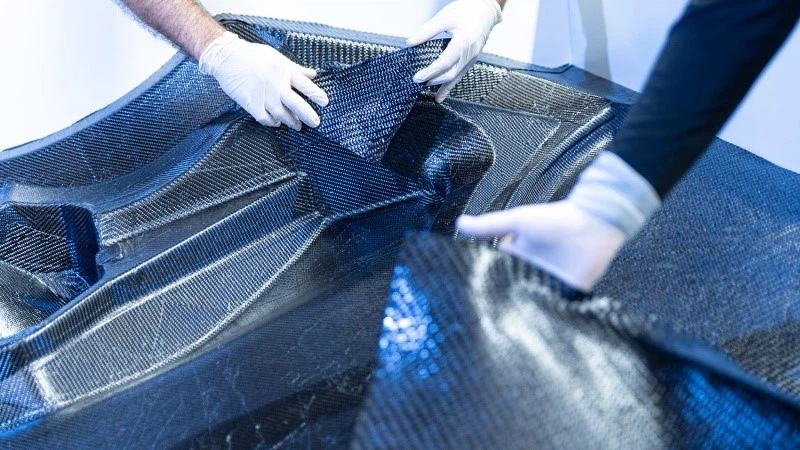
Xinbo Composites offers carbon fiber parts manufacturing services, from mold production, prototype, mass production, coating, assembly of metal parts, package and shipment.Add to Inquiry -
![Carbon Fiber Automotive Parts]()
Carbon Fiber Automotive Parts
Customize premium carbon fiber automotive parts, includingIntake tube systems, intercooler kits, engine covers, airbox, air duct, exhaust systemsRear spoilers, wings, diffusers, splitters, mirrorAdd to Inquiry -
![Carbon Fiber Drone Parts]()
Carbon Fiber Drone Parts
Xinbo Composites customizes High-quality carbon fiber drone parts for transportation & cargo drones.Add to Inquiry -
![Carbon Fiber Car Part]()
Carbon Fiber Car Part
Carbon fiber has become a pivotal material in the automotive industry, particularly for high-performance and luxury vehicles. Its unique properties-lightweight, high strength, and designAdd to Inquiry -
![Carbon Fiber Parts For Cars]()
Carbon Fiber Parts For Cars
Carbon fiber parts are increasingly being utilized in the automotive industry due to their lightweight, high-strength properties, which significantly enhance vehicle performance, fuel efficiency, andAdd to Inquiry -
![Carbon Fiber Car Parts Manufacturer]()
Carbon Fiber Car Parts Manufacturer
Xinbo Composites is a professional manufacturer of high-end customized carbon fiber car parts, our carbon fiber parts are made by autoclave and mold pressing.Add to Inquiry -
![Carbon Fiber Auto Parts Manufacturer]()
Carbon Fiber Auto Parts Manufacturer
Xinbo Composites Carbon Fiber Car Parts| Custom Carbon Fiber Parts|Autoclave MoldingAdd to Inquiry -
![Forged Carbon Fibre Parts]()
Forged Carbon Fibre Parts
Xinbo Composites customizes and provides your vehicle with superior forged carbon fiber parts. Our performance carbon fiber parts may cost you a little more than the ordinary OEM parts, but you willAdd to Inquiry -
![Carbon Fiber Parts Making]()
Carbon Fiber Parts Making
The strength of carbon fiber material is well known across industries as being stronger than steel but 1/10th the weight and having molding characteristics that make it easy to be cast into differentAdd to Inquiry -
![Custom Carbon Parts]()
Custom Carbon Parts
Xinbo Composites provides premium carbon fiber molding and top-quality carbon fiber parts manufacturing services.Add to Inquiry -
![Carbon Fiber Air Intake]()
Carbon Fiber Air Intake
Xinbo Composites has experience in developing cold air intake systems. The carbon fiber air intake system enhances the horsepower and torque and provides increased performance, air velocity andAdd to Inquiry -
![Carbon Fiber Air Duct]()
Carbon Fiber Air Duct
Carbon Fiber Air Duct upgrade designed to redefine your driving experience. Strategically positioned behind the front grills, these air ducts are engineered to deliver a powerful "ram-air"Add to Inquiry



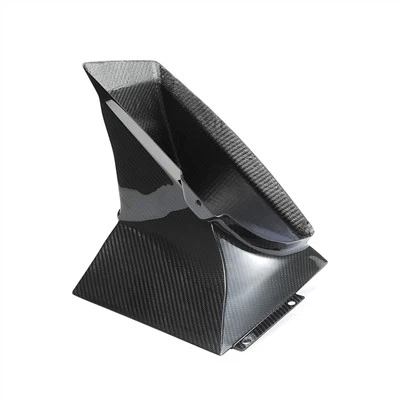
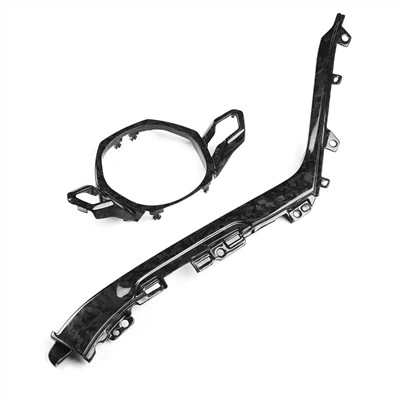
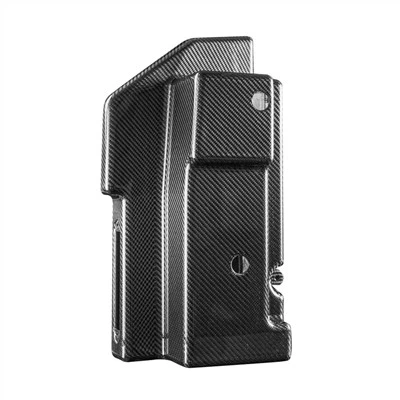
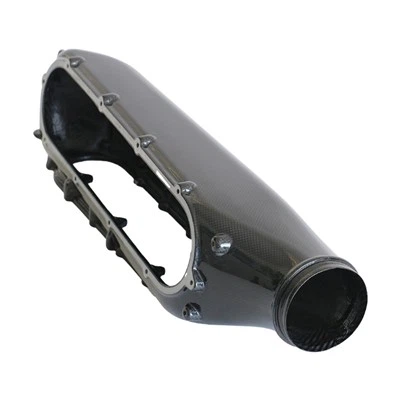


our services
Customize High-end Carbon Fiber Parts For Your Projects
Design and Engineering
Make CAD drawings based on the project needs
Prototyping
Molding the first carbon fiber product for clients' approval
Mold-making
Choose a proper material to make mold according to 3D drawing
Mold Trail
Make testing samples to make sure mold size and details are correct
Mass Production
Lay up carbon fiber prepregs on molds, produced by mold pressing or autoclave process
Coating or CNC machining
Polish carbon fiber parts and coating clearcoat to keep a perfect surface or machining as drawing request
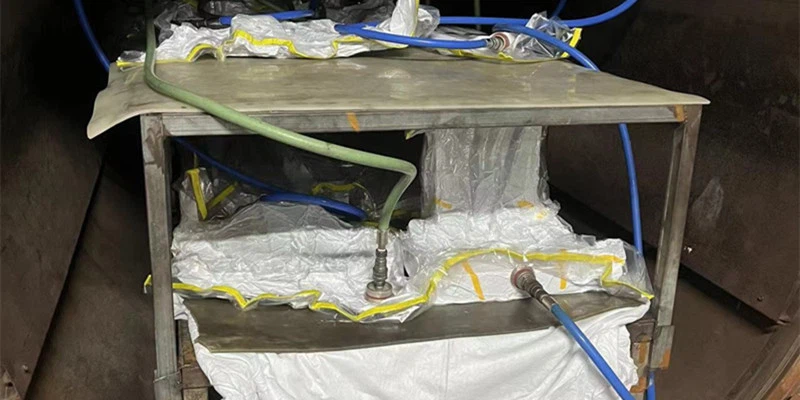
Autoclave Molding
The carbon fiber prepreg blank formed by laying up a single layer of prepreg material in a predetermined direction is placed in an autoclave, and the curing process is completed under a certain temperature and pressure. An autoclave is a special pressure vessel that can withstand and regulate a certain temperature and pressure range. The blank is laid on the surface of the mold with a release agent, then covered with porous release cloth (film), absorbent felt, and the air felt in sequence, sealed in a vacuum bag, and then placed in an autoclave. Before heating and curing, vacuum the bag to remove air and volatiles, and then heat up, pressurize and cure according to the curing system of different resins.
Mold Pressing
The layer-by-layer prepreg is placed between the upper and lower flat molds for pressure heating and curing. The mold pressing is mainly used to produce composite sheets and various carbon fiber parts. It has the characteristics of a high degree of mechanization and automation, and stable product quality.

How to make Carbon Fiber Parts

CNC cutting carbon Fiber Prepregs
We use CNC cutting machines to cut through carbon fiber prepregs into shapes, which is a computer-controlled cutting and set the procedure according to the carbon fiber parts' 3D drawing. This method is more accurate.
Hand lay-up
Put the demold gel on the mold surface, and then lay up several layers of carbon fiber prepregs on the mold, inner unidirectional and outer 3k twill or plain weave prepregs, or as projects' needs.


vacuuming Air
Once the molds have been filled with prepregs carbon fiber, you vacuum the air out of the mold cavity and place the whole assembly first in a vacuum bag — this step enables equal distribution of pressure across the workpiece. An absorbent material, or bleeder, inside the bag facilitates easier air removal and absorbs any excess resin that may bleed out during the curing process.
Autoclave Curing
After removing the air from the bag, the container goes into the autoclave. Then, the curing process begins. The temperature and pressure inside the autoclave rise, hardening the carbon fiber prepregs and removing pores. Once the product has cured for the specified period, and remove it from the autoclave

The Advantages of Autoclave Molding Carbon Fiber Parts
Higher Quality Carbon Parts
The autoclave process creates highly uniform products with minimal defects and significantly less waste than other techniques.
Stronger Performance
The high temperature and pressure used in autoclave molding significantly increase strength to weight ratio, also more resistant to heat and chemical damage
Quicker Prototype Production
The autoclave process allows you to create functional prototypes quickly, enabling shorter testing cycles and speeding up product development.
Be used in a wide range of Applications

Automotive Industry

Industry

UAVs and Drones

Medicals

Water Sports

Energy
Where Do Car Manufacturers Use Carbon Fibre?
Carbon fibre can be incorporated into many areas of a car, including:
Body Components
One place carbon fibre can be used is in the body of the car; though the body of the car differs with each make, it can largely be defined as the engine section and cover, the saloon, and the boot. Carbon fibre applications for the body of the car include the car wing (or fender) and engine hood; spoilers; car doors; and the roof.
Structural Components
Due to the strength of carbon fibre, it can be safely used in structural components of a car, meeting the regulations for performance in a crash, such as energy absorption, as well as under mechanical stresses. Structural applications of carbon fibre include the chassis, roof frame and windshield frames - reinforcing the ABC pillars, plus side sills and more.
Components For EV High-Voltage Batteries
With electric vehicles signalling the future of the automotive world, carbon fibre has begun to be incorporated into components for high-voltage batteries, which are important for increased performance, cost-efficiency, and compatibility with a variety of car models. Carbon fibre is suitable for high-voltage batteries due to meeting regulations for resistance to fire, thermal management, electromagnetic interference shielding, and more.
Wheels
In 1971, Citroën incorporated carbon fibre into their wheels, marking one of the first uses of carbon fibre in the automotive industry. Today, carbon fibre wheels, despite their expense, can be incorporated into vehicles by car enthusiasts for improved handling and driving experience, reduced road noise, and faster acceleration.
Tyres
Similarly to the wheel, the tyres of a car can utilise carbon fibre reinforcement for improved durability, handling, and driving experience. The use of carbon fibre in car tyres is typically seen in racing applications, where carbon fibre reinforcement offers greater contact with the road surface for improved handling.
Interior Design
The distinctive aesthetic of carbon fibre makes it a desirable material for interior wraps and components, especially on luxury cars where customisation is sought. Interior components including the steering wheel and gear stick, door linings, and more, can all incorporate carbon fibre where aluminium and plastic are traditionally used. Carbon fibre now finds itself among the most popular materials and finishes available.
Benefits of Carbon Fiber Car Parts
If you want to keep it running and looking its best, you need high-quality materials and parts. Carbon fiber is one such material and it’s highly versatile. You may have heard of it already. Here are five benefits of carbon fiber car parts:
Heat Resistance
Often car parts will produce a lot of heat as part of the process. For most materials this is unavoidable, but carbon fiber isn’t good at conducting heat. If you have a high-powered car that’s prone to produce more heat, it’s especially useful.
Thermal expansion in parts will cause them to weaken over time. With carbon fiber, there is less thermal expansion. The parts won’t degrade due to high heat exposure, keeping them working longer.
Aesthetic Appeal
Carbon fiber in automotive applications extends beyond car parts. It’s also used for wraps and hoods to make your car look better. Carbon fiber hoods will fit seamlessly with a variety of car models and you can paint it how you want.
You can also install fiber car wraps on the mirrors, spoilers, hood, and anywhere else you like. There is a high level of customization available, letting you make your car unique.
Light Weight
Carbon fiber parts are lightweight, especially compared to steel and sheet metal counterparts. By using it, you can reduce the weight of your car by a significant amount.
Why is this a good thing? Less weight is key if you want to add power to it. Lighter cars can speed up, turn, and stop much better. On top of that, there is the added fuel efficiency you’ll get.
Strength
Compared to other materials, carbon fiber vehicle parts are much stiffer and stronger. In fact, it’s got the highest strength and stiffness per density on the market.
It’s also able to absorb energy at a higher rate, which is crucial in the event of a crash or collision. Carbon fiber car parts can make your car safer to drive as a result.
Durability
Like strength, durability is a desirable trait for car parts and materials. After all, you don’t want a car that’s always needing repairs a the auto shop. Not only is that an inconvenience, but it can drain your wallet too.
Carbon fiber material ranks high on the durability scale, giving you parts you can rely on. Because of this, it’s especially good if you’re traveling often.
Road trippers and RVers in particular should consider carbon fiber vehicle upgrades. This way, you’re getting durable, long-lasting parts you can rely on while you’re out exploring.
Frame Material: Carbon Fibre and Fibreglass
Carbon fiber and Fiberglass are two popular materials for quadcopter frames. The choice between carbon fiber and fiberglass depends on many factors.
Weight
Carbon fiber is lighter than fiberglass, it’s 70% lighter than steel, 40% lighter than Aluminum. The nature of carbon fiber is low in weight, rigid, and strong. This is why most weight-critical performance products use carbon fiber, and it’s a far more popular choice of material for mini quad frames.
Strength vs Rigidity
Rigidity is also known as stiffness. Carbon fiber and fiberglass are both very strong, but Carbon fiber is more rigid. Carbon fiber is about 3 times stiffer than steel and aluminum for a given weight.
In applications where a small amount of flexibility is allowed, carbon fiber is a top choice. Fiberglass is better suited to extreme flex patterns, while carbon fiber has a relatively small flex window.
Toughness
The shape of Carbon fiber doesn’t deteriorate over time. That means the shape of carbon fibre doesn’t change when consistent and constant force is applied on it.
Fibreglass however being more flexible, it means that glass-fiber typically has a higher ultimate breaking point than a similarly shaped carbon fiber product, therefore having higher strength-to-weight ratio. In general it is a “tougher” material. The incredible rigidity of carbon makes it less capable of enduring certain abuses than fiberglass. I guess therefore you could say CF “more brittle”
Thermal and Electrical Characteristics
As opposed to most other materials, carbon fiber has a negative coefficient of thermal expansion which means they don’t expand or shrink as much as fibreglass when the temperature changes. This is a desirable quality for applications that have to operate in a wide range of temperatures.
Fiberglass composites are insulators, which means they do not respond to an electric field and resist the flow of electric charge. Fiberglass composites are very radiolucent, which means they allow radiation to pass through it freely. This makes fiberglass rods a useful material for antennas. CF is conductive and it’s a problem for mini quad frames.
Price
Fiberglass is more cost effective. Long strands of carbon fibers are very difficult and expensive to manufacture, while fiberglass processes much easier. As a result, fiberglass is considerably less expensive than carbon fiber. Fiberglass composites are less expensive than carbon composites in most cases.
High Gloss Carbon Fiber Care
Here are some best practices and pointers for basic high gloss carbon fiber care.
Preventing Scratches and Swirl Marks
You’ll want to keep your carbon fiber surfaces clear to protect the clear coat and the fibers underneath. Allowing dust or pollen to accumulate on the surface can result in swirls or scratches when you remove them. These scratches or swirls will be even more evident on high-gloss carbon fiber.
Luckily, cleaning off many carbon fiber surfaces doesn’t require too much special knowledge or special tools. You can clean off most carbon fiber surfaces with gentle soap and warm water. If it’s safe for a vehicle’s painted surface, it’s likely safe for the clear coat on carbon fiber.
Cleaning With Water and Soap Or a Mild Cleanser
If the carbon fiber surface is not particularly dirty, a simple rinse with warm water may suffice to remove any film or residue from its surface. However, it is important never to allow water to dry on the surface of carbon fiber.
If you allow water to dry on the surface, it may result in spotting or hard water staining that will then be difficult to remove; it will also be highly noticeable on carbon fiber. Also, allowing water to dry on any carbon fiber product can damage the carbon fiber’s clear coat, especially under hot and sunny conditions.
Do Not Wash in Direct Sunlight
Whether you’re washing your carbon fiber with warm water or using soap or some other type of cleaning compound, avoid washing it in direct sunlight, which will likely cause water to dry before you can remove it.
Use a microfiber towel to remove water: Be sure to remove all water and residual moisture from high gloss carbon fiber with a soft microfiber towel; microfiber is recommended because it will help prevent scratches and swirls.
Avoid Acids and Harsh Solvents
If you choose to use a soap or cleaning agent, be sure to avoid any products with harsh acids, as these can damage the clear coat finish of your high gloss carbon fiber. This will ruin the finish and over time will hasten the carbon fiber’s susceptibility to UV degradation. You can use acetone and a soft cloth to remove stubborn pen or tape marks, etc.
Never Use Abrasives
It is also critical to avoid abrasive polishes and paste wax. These may not only ruin the finish of high gloss carbon fiber but if used repeatedly will damage or strip the epoxy resin coating from the carbon fiber.
Wax May Be Used To Protect the Finish
If you are going to use a wax product to seal your carbon fiber products, be sure to use either a spray-on wax or another wax that is rated as carbon-fiber appropriate. Some waxes can effectively preserve the clear coating of carbon fiber and protect fading, yellowing, or breaking down as a result of harsh chemicals or exposure to sunlight.
Store Your Carbon Fiber Products Out Of Direct Sunlight
While some carbon fiber matrices are UV resistant, it’s best to store your products out of direct sunlight. Keeping them protected from the sun will extend the life of the UV-resistant agents in the epoxy resin finish.
Restoring Fading Or Yellowing
If your high glass carbon fiber has faded, yellowed, or suffered swirl damage, then you may want to polish the top layer of the clear coat to reveal the undamaged layer underneath. Apply a carbon fiber-appropriate glaze or polishing compound in a cool, shaded area; work it onto the surface of the carbon fiber, allow it to sit for about ten minutes, and then wipe it off with a microfiber towel.
Frequently Asked Questions about Carbon Fibre Plates
Q: What is the point of carbon fiber car parts?
Q: Are carbon parts worth it?
Q: What are carbon fiber tubes used for?
Q: What is the best material for intake pipes?
Q: What is the purpose of carbon fiber?
Q: Is carbon fiber safe for the body?
Q: Is carbon fiber good for drones?
Q: Which material is best for making drone frames?
Q: How much does carbon fiber cost?
Finished carbon fiber composite parts and structures are expensive mainly because the material is expensive. In addition, fabrication methods tend to be labor-intensive, which drives up the cost. Further, in aerospace composites manufacturing, the material is cured in an industrial autoclave, which is time-consuming and expensive — and time is money.
Q: Why is carbon fiber expensive?
Q: How long does carbon fiber last?
Carbon fiber composites don’t rust or corrode the way metals do, and they don’t rot the way wood does. Although carbon fiber composites are, pound for pound, stronger and stiffer than any other material, they can be damaged, which can create cracks and delamination (where layers of composites separate from each other), leading to failure.
Q: What is the difference between 100% Carbon Fiber and Carbon Fiber/Fiberglass?
Better - Carbon Fiber / Fiberglass - Fiberglass backing with a carbon fiber overlay.
Best - 100% Carbon Fiber - Uses a few to several layers of carbon fiber depending on the support required (no fiberglass is used).
All of our carbon fiber products will look similar in appearance, the major differences will be found in the overall weight and strength of the piece
Q: What are the advantages of Carbon Fiber in Cars?
Carbon fiber can absorb significant impact energy, making it sturdier than steel. It’s about five times stronger and twice as stiff.
Lightweight
Carbon fiber is lighter than aluminum, steel and other traditional metals
Durable
Carbon fiber is durable because of its increased stiffness and tensile strength
Easy to Mold
Carbon fiber is usually long and thin, making it easier to mold than steel. It’s also more flexible to manufacture
Appealing Look
Car parts made from carbon fiber are aesthetically more appealing and also make vehicles look more unique.
Q: What's the production time for customized carbon fiber parts?
Q: Do you offer CNC machining services?
Q: How many surface finishes do you offer?
Q: Which manufacturing processes of carbon fiber parts do you have?
Q: What are your customized flows?
Q: Do you have a minimum quantity for customized orders?
Q: Do you customize carbon fiber car or motorcycle parts?
Q: Do you use 100% carbon fiber prepregs?
As one of the most professional carbon fiber parts manufacturers in China, we're featured by quality products and good service. Please rest assured to buy or customized carbon fiber parts at competitive price from our factory.
Buy carbon fiber rear diffuser, Carbon Fiber Trim manufacturers, carbon fiber spoiler