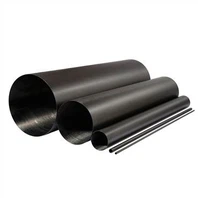
A carbon fiber telescopic antenna mast is a lightweight, extendable support structure designed for mounting antennas, sensors, communication equipment, and lightweight payloads in temporary or mobile field environments. Compared with traditional aluminum, steel, or fiberglass masts, carbon fiber offers a strong balance of low weight, high stiffness, corrosion resistance, and easy deployment.
For radio communication, emergency response, field testing, military applications, UAV ground stations, marine systems, and portable monitoring equipment, the mast must be stable, easy to carry, and reliable under outdoor conditions. This is where carbon fiber telescopic antenna masts provide clear advantages.
What Is a Carbon Fiber Telescopic Antenna Mast?
A telescopic antenna mast is made from multiple tube sections that slide into one another. The sections extend upward to reach the required height when working, and collapse into a compact length for transport and storage after use.
Made from carbon fiber composite, each tube section is produced using carbon fiber prepregs, providing high strength-to-weight performance. Depending on the design, the tubes may use woven carbon fiber, unidirectional carbon fiber, or a hybrid layup to achieve the required stiffness, bending strength, and durability.
Carbon Fiber Telescopic Antenna Mast Advantages
Various height options, from standard 6m, 8m, 10m and 13m to customized heights.
The biggest advantage of carbon fiber is weight reduction. A carbon fiber mast is much lighter than a steel mast and often lighter than many aluminum alternatives. This makes it easier for one person to carry, install, and reposition in the field.
Carbon fiber also provides excellent stiffness. A stiff mast helps reduce bending and vibration when supporting antennas at height. This is important for stable communication performance, especially when the mast is used outdoors or in mobile operations.
Another advantage is corrosion resistance. Unlike metal masts, carbon fiber does not rust. This makes it suitable for coastal areas, humid environments, marine applications, and long-term outdoor use.
Carbon fiber also has good fatigue resistance. For telescopic structures that may be repeatedly extended, collapsed, transported, and redeployed, durability is an important factor.
Carbon Fiber Antenna Mast Specifications
| Extended Length | Closed Length | Payload | Accessories Options |
| 6m | 1.47m | 12 kg |
1. Top Screw 1/4" & 3/8" 5. Wire Guying System (3pcs * 18m x 4mm high density nylon ropes, 3pcs * carbon steel ground pins 9x300mm, Top Connector) |
| 8m | 1.46m | 7kg | |
| 10m | 1.49m | 5 kg | |
| 13m | 1.85m | 2kg | |
| 15m | 2.1m | 1~1.5kg |
Carbon Fiber Telescopic Antenna Mast Applications
Carbon fiber telescopic antenna masts are widely used in radio communication, tactical communication, emergency rescue, temporary base stations, field monitoring systems, and test equipment.
Suitable for amateur radio, portable satellite communication, vehicle-mounted communication systems, and remote sensing platforms. In many cases, the mast must be deployed quickly and carried over long distances, so low weight becomes a major advantage.
For industrial and security applications, telescopic masts can also support lightweight cameras, sensors, signal receivers, environmental monitoring devices, and measurement instruments.
A carbon fiber telescopic antenna mast is an effective solution for lightweight, portable, and reliable antenna support. Its high strength-to-weight ratio, stiffness, corrosion resistance, and customizable structure make it suitable for communication, field operations, emergency response, industrial monitoring, and specialized equipment platforms.
For users who need a mast that is easy to transport, quick to deploy, and stable in demanding conditions, carbon fiber is one of the most practical and high-performance material choices.