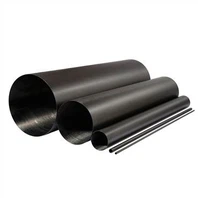
Carbon fiber has moved from racing and supercars into a much wider range of automotive applications. For builders, tuning shops, restoration projects, and performance-focused brands, custom carbon fiber automotive parts offer a strong combination of lightweight structure, premium appearance, and functional design flexibility.
This guide explains what custom carbon fiber automotive parts are, where they are commonly used, how they are made, and what distributors should consider before starting a customized project.
What Are Custom Carbon Fiber Automotive Parts?
Custom carbon fiber automotive parts are vehicle components designed and manufactured to meet specific requirements rather than standard off-the-shelf dimensions. These parts can be made for exterior styling, interior trim, aerodynamic improvement, weight reduction, heat resistance, or structural reinforcement.
Unlike generic accessories, custom parts are usually developed around a vehicle model, installation position, performance goal, or brand design language. This makes them suitable for limited-edition vehicles, aftermarket upgrade kits, motorsport projects, prototype development, and high-end customization.
Why Choose Carbon Fiber for Automotive Parts?
The main advantage of carbon fiber is its high strength-to-weight ratio. Compared with many metal or plastic components, carbon fiber parts can reduce weight while maintaining excellent stiffness. This is especially valuable for performance vehicles, where lower weight can improve acceleration, handling, braking, and energy efficiency.
Carbon fiber also provides a distinctive visual texture. The woven pattern, glossy finish, and technical appearance make it popular for exterior and interior upgrades. For premium vehicles, carbon fiber is often associated with performance, precision, and high-end craftsmanship.
Another benefit is design flexibility. Carbon fiber can be molded into complex shapes, making it useful for aerodynamic parts, body panels, ducting, covers, brackets, and decorative trims. With the right tooling and layup design, manufacturers can balance appearance, strength, thickness, and weight.
Common Custom Carbon Fiber Automotive Parts
Custom carbon fiber parts can be used across many areas of a vehicle. Exterior applications include hoods, fenders, front lips, splitters, side skirts, rear diffusers, spoilers, mirror covers, engine covers, air ducts, intake tubes, and underbody panels.
Interior applications include dashboard trim, center console panels, steering wheel components, seat backs, door panels, shift paddles, instrument surrounds, and custom decorative inserts.
For motorsport and functional use, carbon fiber may be used for seat shells, battery boxes, aerodynamic wings, cooling ducts, protective covers, lightweight brackets, chassis panels, and reinforcement plates. These parts usually require stricter engineering control than purely cosmetic accessories.
Carbon Fiber Automotive Parts Methods
Our manufacturing methods are compression molding and autoclave molding
CNC trimming, drilling, polishing, clear coating, and inspection are also important finishing steps, and we also provide these services.
How to Start a Custom Carbon Fiber Parts Project
A successful project should start with a clear requirement. The buyer should define the target vehicle, installation position, purpose, finish style, expected quantity, strength requirement, temperature environments, and budget range.
The next step is design confirmation. This may include drawings, CAD files, 3D scanning, reference samples, or physical vehicle measurements. After that, the manufacturer can develop the mold, produce samples, test fitment, adjust details, and move into production.
For professional projects, it is better to confirm these items before production: material type, manufacturing process, surface finish, tolerance standard, mounting method, lead time, packaging method, and inspection criteria.
Custom carbon fiber automotive parts are not just visual upgrades. When designed and manufactured correctly, they can improve weight, stiffness, airflow, thermal performance, and overall vehicle quality.
For appearance-focused parts, surface finish and fitment matter most. For performance and structural parts, engineering design, layup direction, reinforcement, and testing are critical. A reliable carbon fiber project should always balance design, function, manufacturing quality, and installation safety.
Carbon Fiber Automotive Parts Quality Inspection
Good custom carbon fiber automotive parts should be inspected before delivery or installation. Important points include surface clarity, weave alignment, resin bubbles, pinholes, scratches, edge finish, thickness consistency, mounting hole accuracy, dimensional fitment, clear coat quality, and structural reinforcement.
For functional parts, additional checks may include weight measurements, stiffness testing, heat resistance validation, vibration testing, and trial installation.
Low-quality carbon fiber parts often show uneven weave, cloudy clear coat, rough edges, poor symmetry, visible air bubbles, weak mounting areas, and inconsistent thickness. Good custom carbon fiber automotive parts should be inspected before delivery or installation. Important points include surface clarity, weave alignment, resin bubbles, pinholes, scratches, edge finish, thickness consistency, mounting hole accuracy, dimensional fitment, clear coat quality, and structural reinforcement.
For functional parts, additional checks may include weight measurement, stiffness testing, heat resistance validation, vibration testing, and trial installation.
Low-quality carbon fiber parts often show uneven weave, cloudy clear coat, rough edges, poor symmetry, visible air bubbles, weak mounting areas, and inconsistent thickness.
Good custom carbon fiber automotive parts should be inspected before delivery or installation. Important points include surface clarity, weave alignment, resin bubbles, pinholes, scratches, edge finish, thickness consistency, mounting hole accuracy, dimensional fitment, clear coat quality, and structural reinforcement.
For functional parts, additional checks may include weight measurement, stiffness testing, heat resistance validation, vibration testing, and trial installation.
Low-quality carbon fiber parts often show uneven weave, cloudy clear coat, rough edges, poor symmetry, visible air bubbles, weak mounting areas, and inconsistent thickness.
Xinbo Composites is a professional manufacturer of carbon fiber car parts, specializing in customizing and manufacturing high-quality carbon fiber automotive parts for some European brands. Please contact us for a quote if you have any new or pending projects.