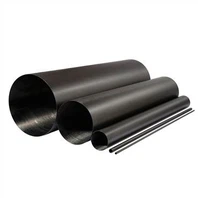
In a Delta robot system, the parallel arms are the most critical components for determining the machine's speed, precision, and payload capacity. Using carbon fiber tubes instead of traditional aluminum or steel significantly enhances performance due to the drastic reduction in moving mass.
Carbon Fiber Tube for Delta Robot arm Advantages
Reduced Inertia: Carbon fiber is roughly 40% lighter than aluminum. Lower mass in the parallel links allows for higher accelerations (often exceeding 15 G) and faster cycle times (up to 3+ cycles per second).
High Specific Stiffness: Carbon fiber has a much higher modulus than metals, meaning the arms experience minimal deflection during high-speed direction changes. This directly improves the robot's positional accuracy.
Vibration Damping: Composite materials naturally dampen vibrations better than metals. This leads to smoother settling times at the end of a movement, which is vital for high-speed "pick and place" operations.
Low Thermal Expansion: Carbon fiber is thermally stable. Unlike aluminum, which expands with heat, carbon fiber arms maintain their precise length even during long production runs where the robot motors may heat the environment.