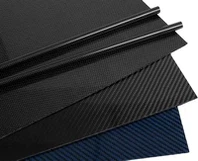
Carbon fiber board can be used in automobiles, high-speed rails and airplanes, and it is an important boost for the lightweight development of current vehicles. However, if you want to make full use of carbon fiber board, there are many considerations. First of all, we must consider whether the temperature factor is appropriate. For example, can the carbon fiber board be used normally in a high temperature environment of 180°C?
It is difficult for carbon fiber board to withstand 180°C
180°C is not a particularly high temperature condition. The temperature of the open flame we usually encounter can reach 600°C or more, but for carbon fiber board, 180°C may exceed its high temperature resistance limit.
Carbon fiber board is usually made of carbon fiber prepreg by compression molding. The carbon fiber part can withstand high temperatures of thousands of degrees Celsius while maintaining the same performance, but the resin material that maintains the shape of the carbon fiber board is not enough.
Commonly used resin materials can be divided into two categories: thermosetting and thermoplastic. Among them, thermosetting resins include epoxy resins, bismaleamide resins, phenolic resins, etc., while thermoplastic resins include polyether ether ketone, polyphenylene sulfide, and polyamide resins. Imines and so on. The core difference between the two is that the thermoplastic resin can be melted again at high temperature to reshape its shape, which is suitable for recycling and secondary use.
Take the most commonly used epoxy resin to illustrate. Theoretically, it will oxidize and decompose at a high temperature of 180~200℃. Actually, it may not be able to withstand the high temperature of 150℃ for a long time baking, resulting in carbon fiber. The board form collapsed inside.