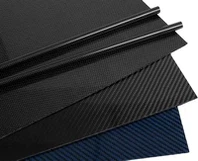
Xinbo Composites customizes carbon fiber parts for plenty of applications, including automation, industrial, medical, and sporting, etc. If you want to customize carbon fiber parts, please review the following steps and contact us to request a quote.

1. Design & Engineering
We start with your requirements for carbon fiber parts, application environment, dimensions, load conditions, and surface expectations.
Customers offer 3D drawings for structural checking or the original parts, and we will scan the parts and create 3D CAD models. We also make 3D printed parts to verify the dimensions for some complex parts and confirm the best carbon fiber material, layup direction, and manufacturing method.
2. Mold Making
Precision molds are produced based on the approved design. CNC-machined stainless steel, aluminum molds or fiberglass molds are used to ensure accurate dimensions, smooth surfaces, and repeatable production quality.
3. Material Cutting
Carbon fiber fabric, prepreg, foam core, honeycomb, or other reinforcement materials are cut to exact shapes. Accurate cutting helps reduce waste and ensures each layer fits the mold correctly.
4. Layup & Lamination
Carbon fiber layers are placed into the mold according to the designed layup schedule. Fiber direction, layer sequence, resin distribution, and reinforcement areas are carefully controlled to achieve the required strength and appearance.
5. Vacuum Bagging
The laid-up part is sealed with vacuum film and vacuum fittings. Air and excess resin are removed to improve compaction, reduce voids, and create a stronger, cleaner laminate structure.
6. Curing
The part is cured under controlled temperature and pressure in an autoclave or heated mold. This process hardens the resin system and gives the carbon fiber part its final mechanical performance.
7. CNC Trimming & Finishing
After demolding, the part is trimmed, drilled, sanded, polished, or coated according to the final requirements. CNC machining ensures precise edges, holes, and assembly features.
8. Inspection & Delivery
Each finished part is checked for dimensions, surface quality, weight, fitment, and structural defects. Approved parts are cleaned, protected, packed securely, and prepared for delivery.