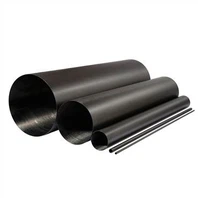
Carbon fiber mold pressing makes strong, lightweight parts from carbon fiber prepreg. First, we cut carbon fiber prepregs and lay up into a mold that resembles the finished product. They apply heat and pressure to the mold. This makes the material take the mold's shape and harden. The result is a carbon fiber part that's light and strong. People use these parts in cars, planes, and sports equipment for their strength and low weight. This method is popular because it makes durable and lightweight components efficiently.
What are carbon fiber molding processes?
Carbon fiber molding is an advanced process and is used to create strong, lightweight components for various applications, from aerospace to automotive and sports equipment. Let's explore this process step by step in a detailed, easy-to-understand way.

Understanding Carbon Fiber Material
Carbon fiber consists of thin, strong crystalline filaments of carbon fiber. Manufacturers use it to make durable, lightweight composite materials, stronger than steel but much lighter.
Design and Mold Preparation
Every carbon fiber part starts with a design. Engineers create a design based on what the part needs to do. Then, they make a mold. This mold shapes the carbon fiber into the desired form. It's often made of steel, aluminum or fiberglass materials.
Cutting the Carbon Fiber Prepregs
Now, it's time to cut the carbon fiber prepregs are made of carbon fibers and epoxy. Workers cut it into shapes that fit the mold. They use special scissors or cutting machines for precision.
Laying the Carbon Fiber Prepregsin the Mold
Employees put the carbon fiber fabric covered in resin into the mold and with well-designed directions to meet the strength requirements.
Curing Process
Put the molds on the mold press machine. This machine applies heat and pressure to cure the resin. Curing means turning the liquid resin into a solid. It binds the carbon fibers together, making them strong and rigid.
Cooling and Demolding
After curing, the part needs to cool down. Once it's cool, workers remove it from the mold. They need to avoid damaging the part or the mold.
Trimming and Finishing
The part might have extra material or rough edges. Workers trim these off, usually with a grinder. Then, they sand the part to make it smooth. Some carbon fiber parts are applied with paint or a clear coat for protection.
Inspection and Quality Control
Quality is crucial. Each part undergoes inspection to make sure it meets all the standards. They check for defects like cracks or weak spots or defect surfaces. If a part isn't perfect, they fix it or make a new one.
Final Assembly
Finally, the carbon fiber part is ready for use. It might be a piece of a larger product. In that case, workers assemble it with other parts to make the final product.